Cover letter templates that stay on one page
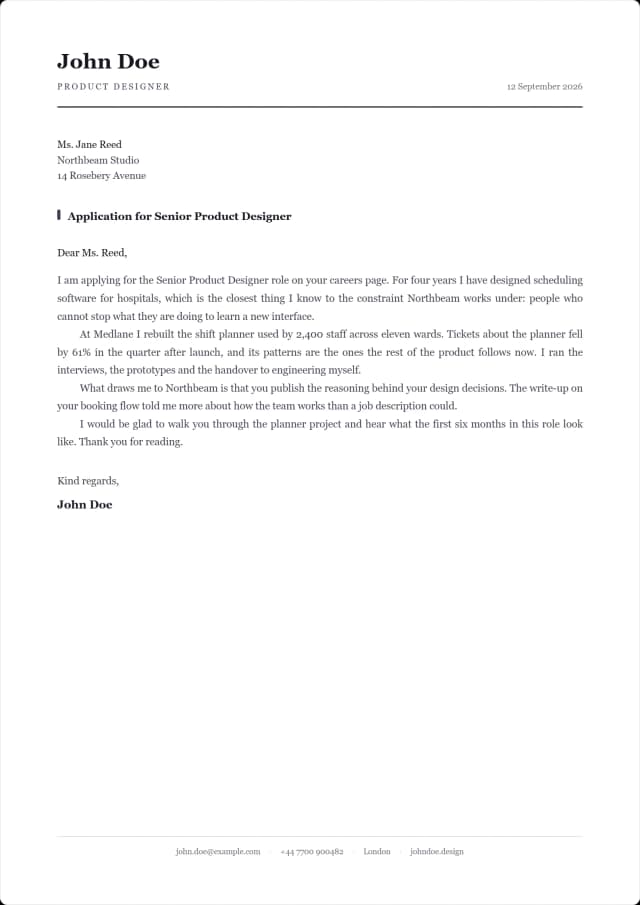
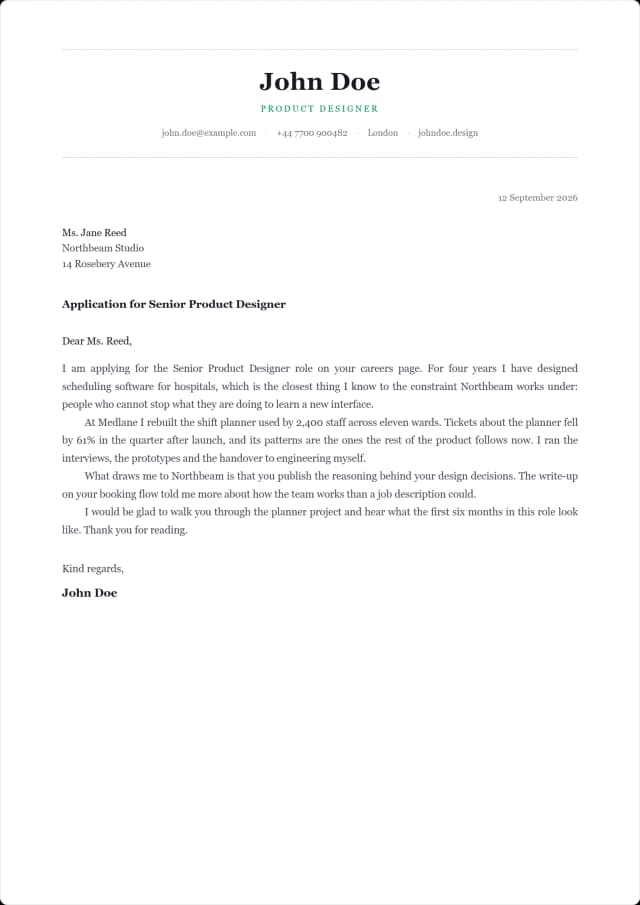
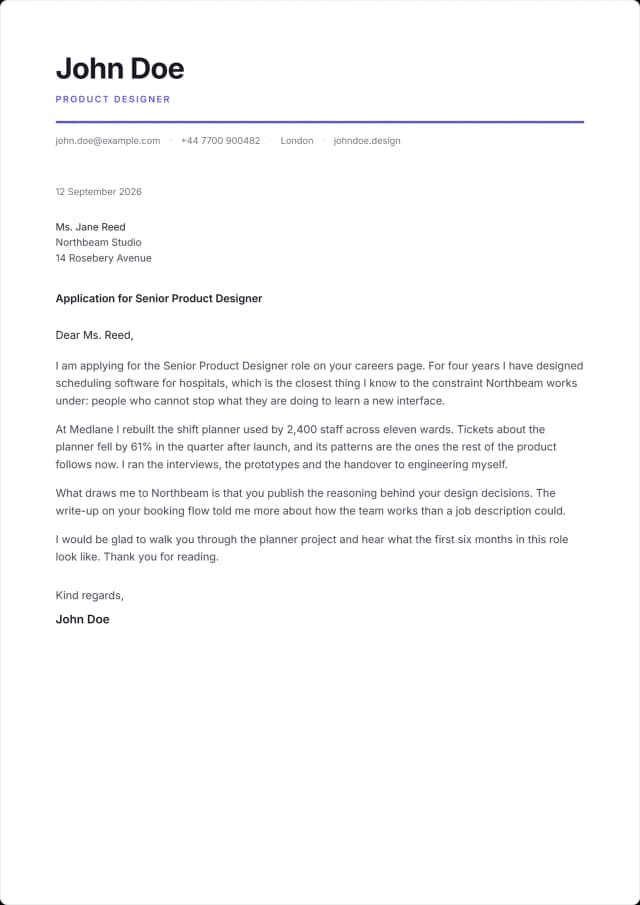
20 layouts drawn for A4, with the margins, the header and the spacing already settled. Pick one, read it at full size, and put your time into the sentences instead.
Free, no account. Your draft stays in this browser.
20 layoutsA4, print-ready250 to 400 wordsFree, no signup
The templates
20 cover letter templates, one letter
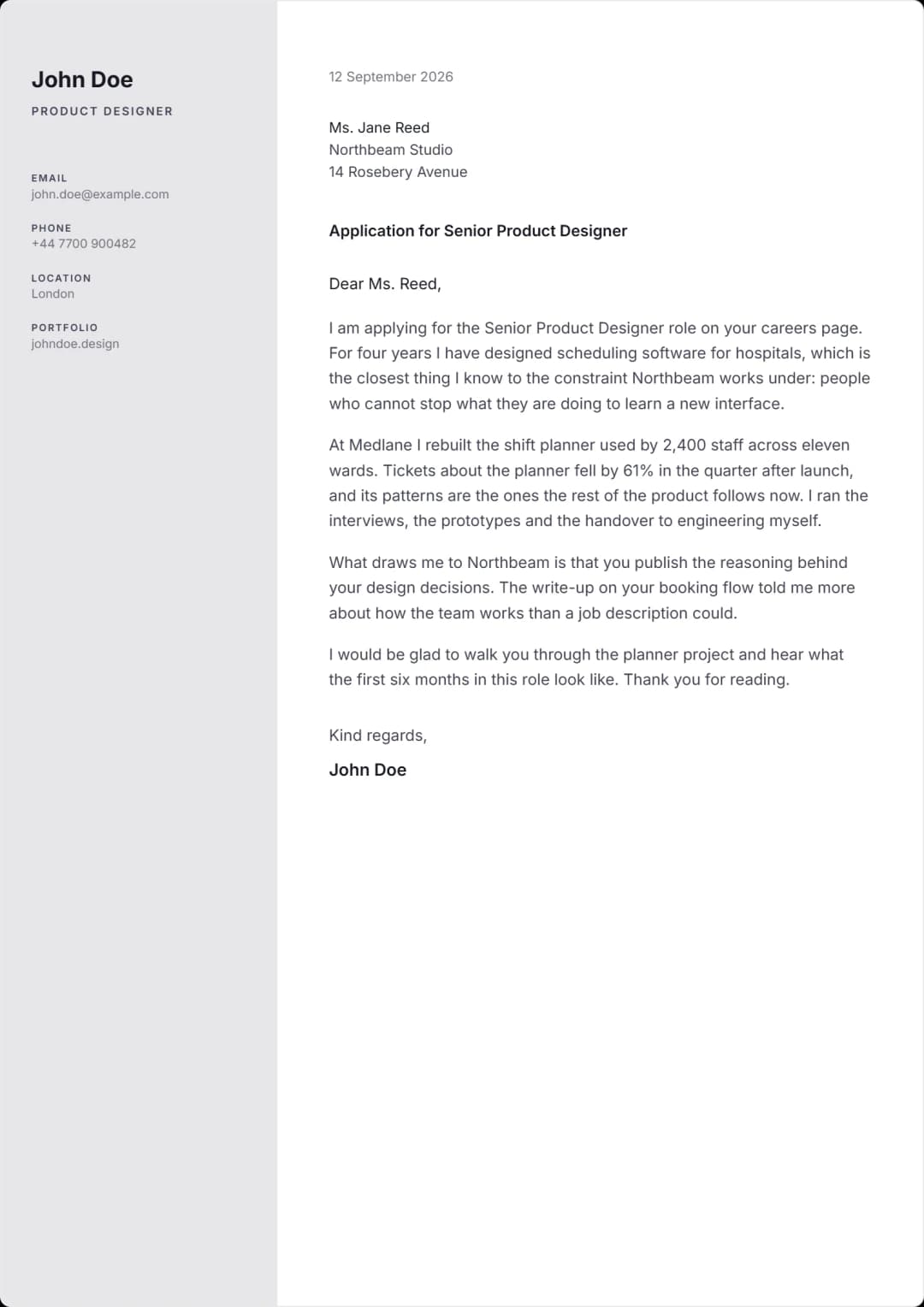
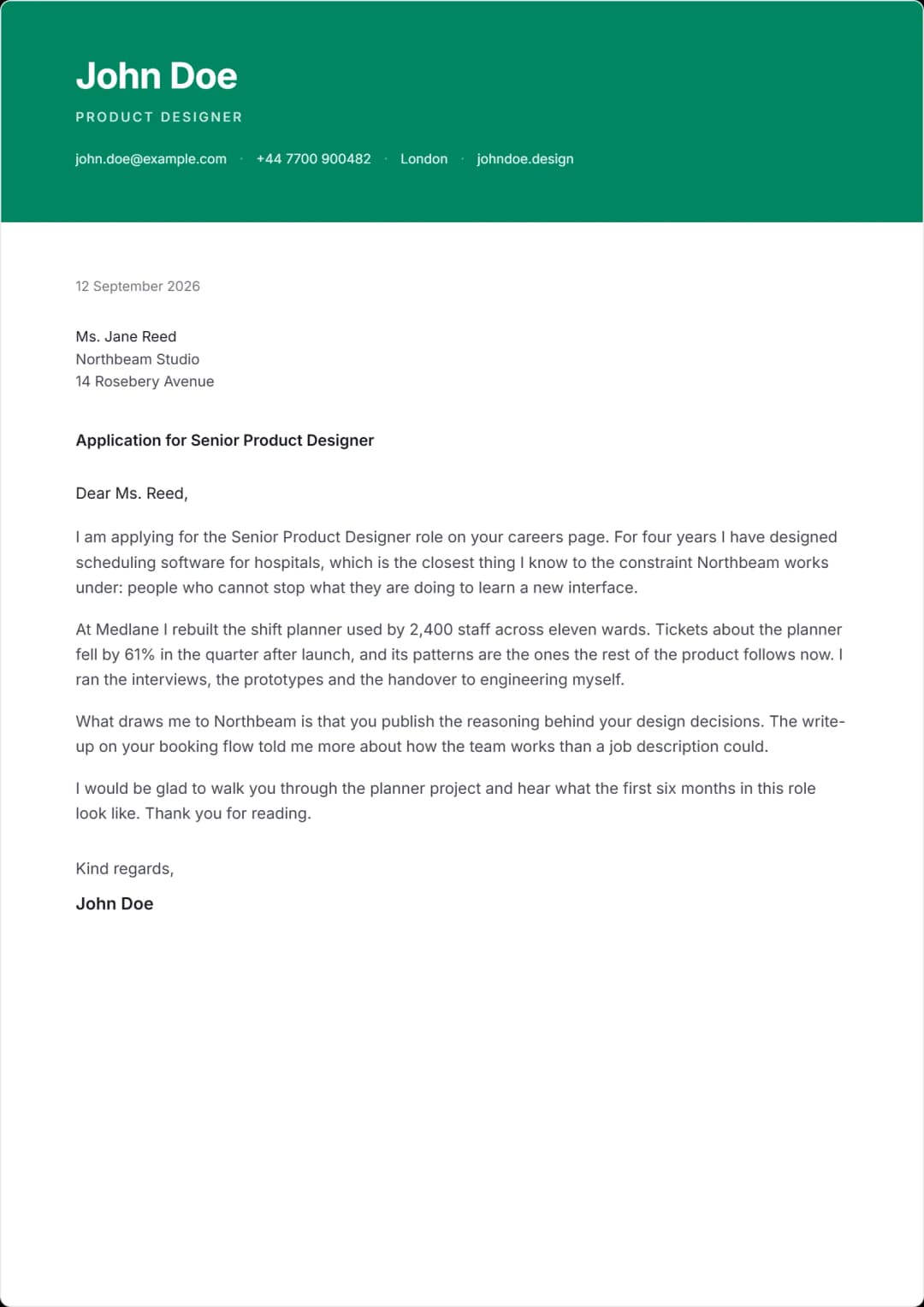
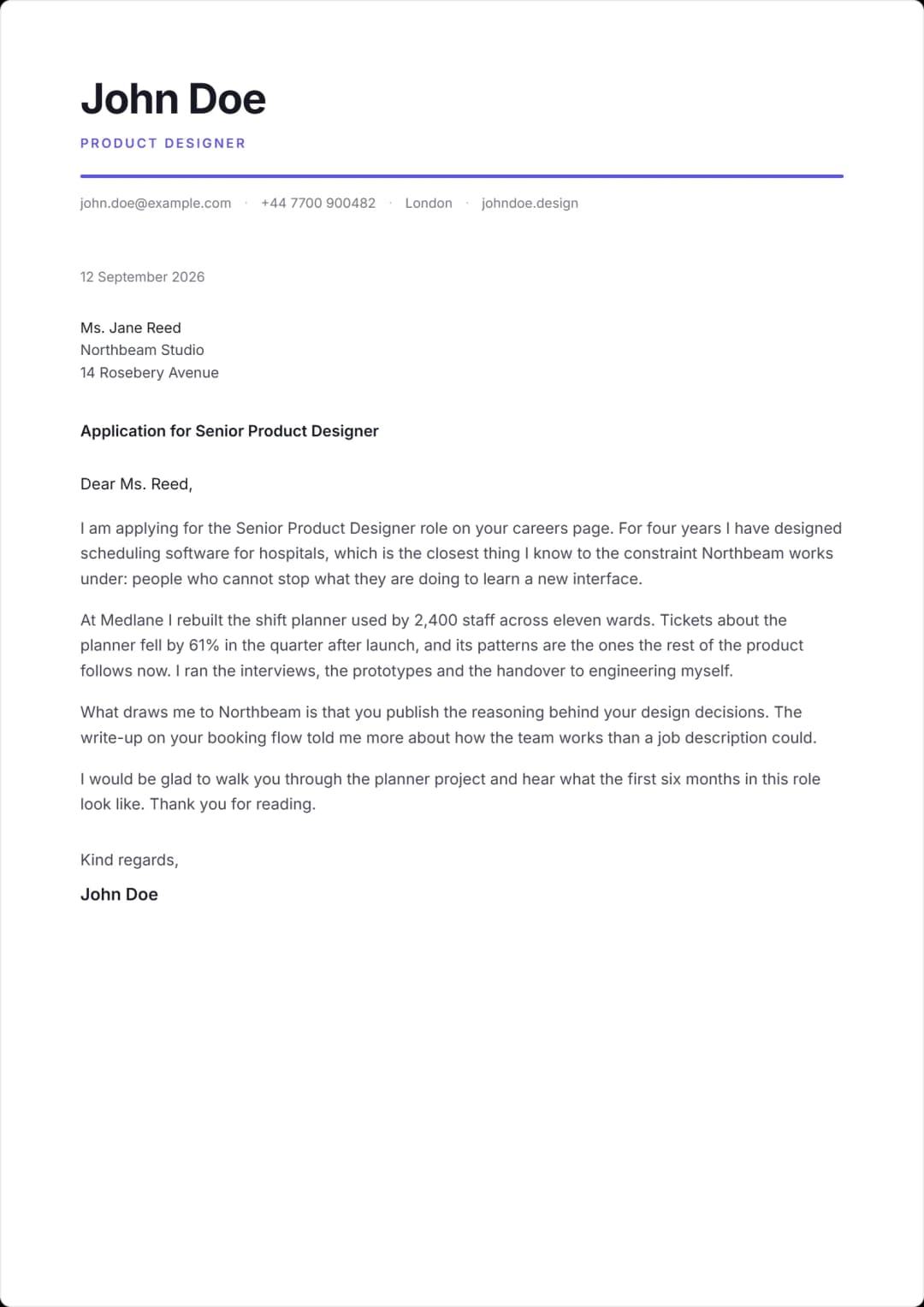
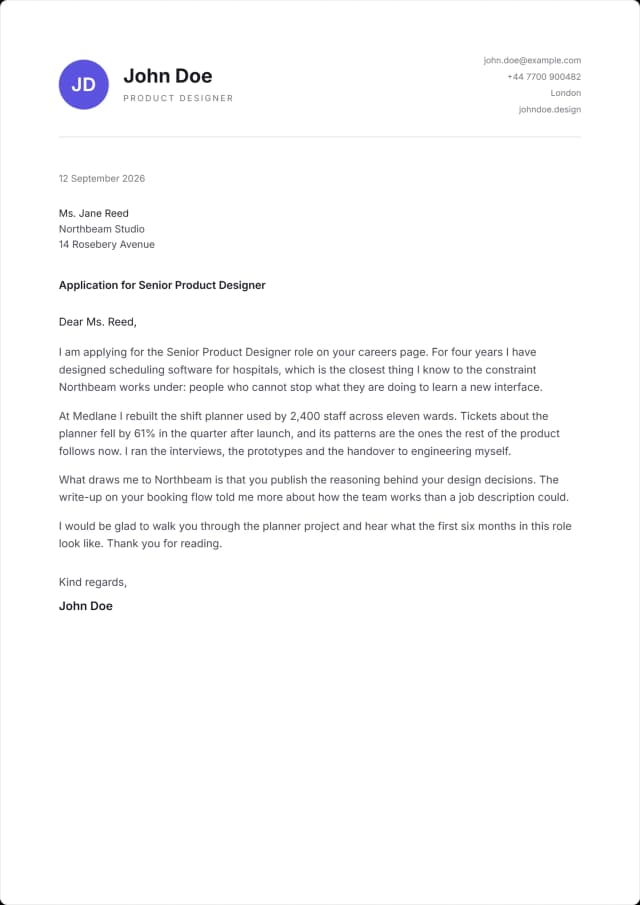
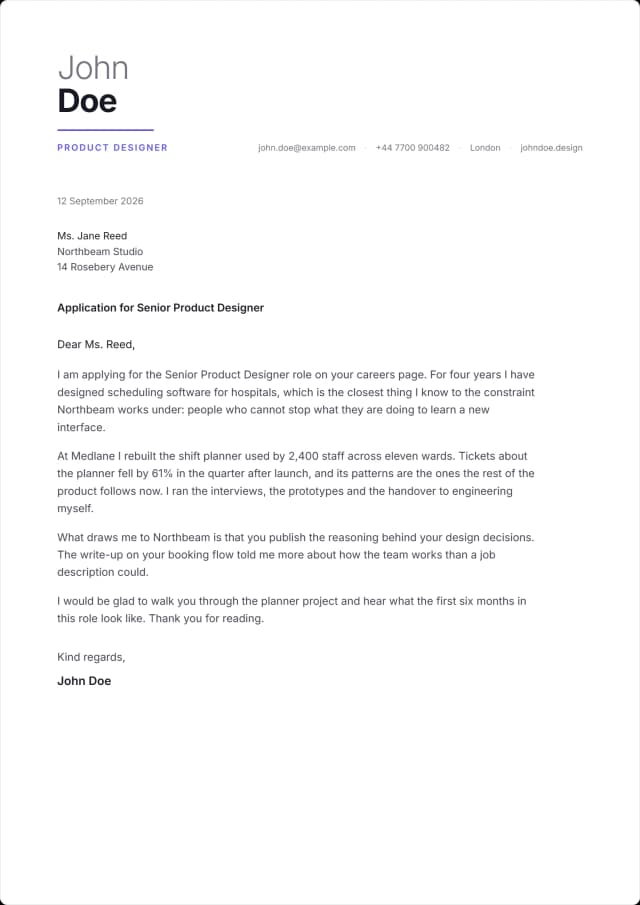
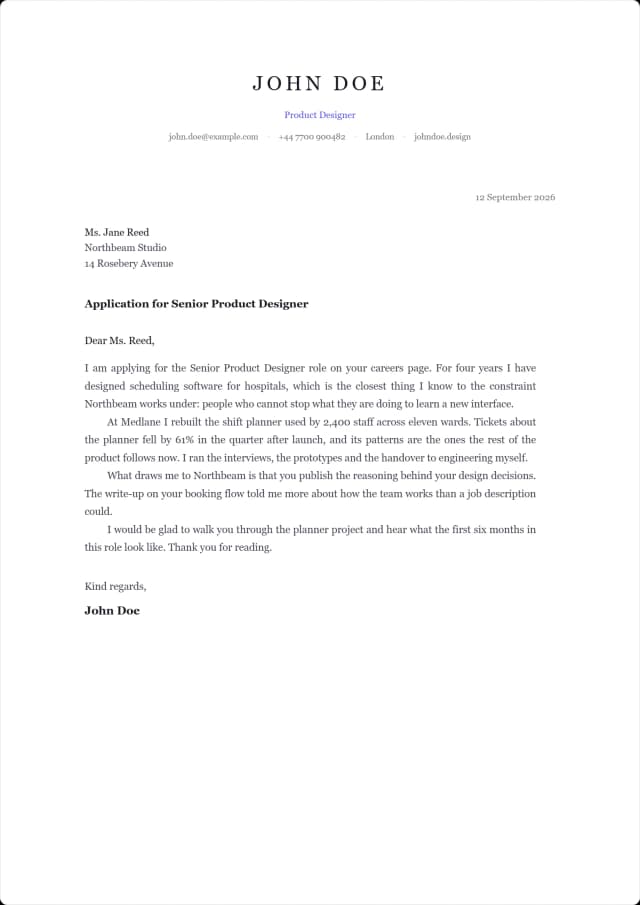
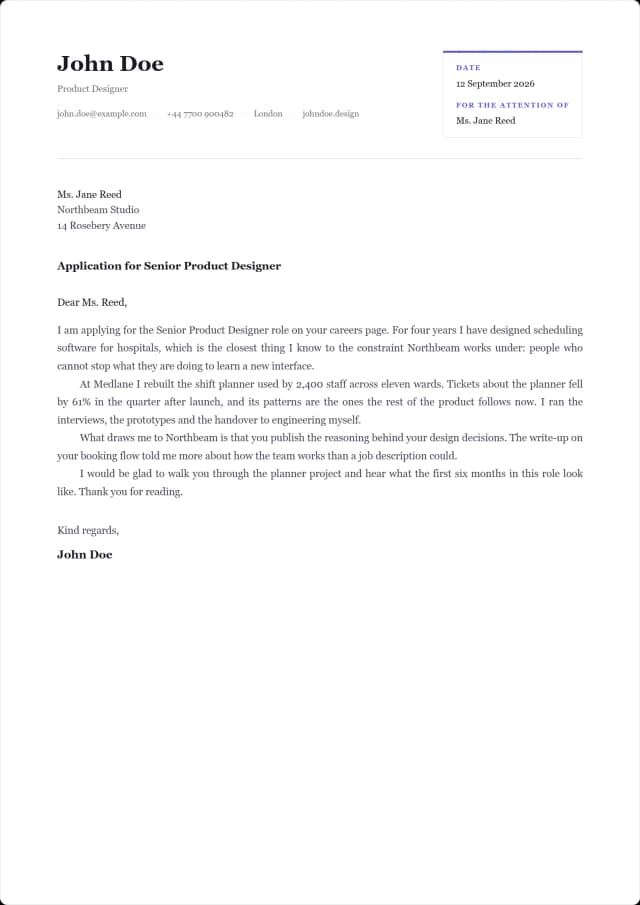
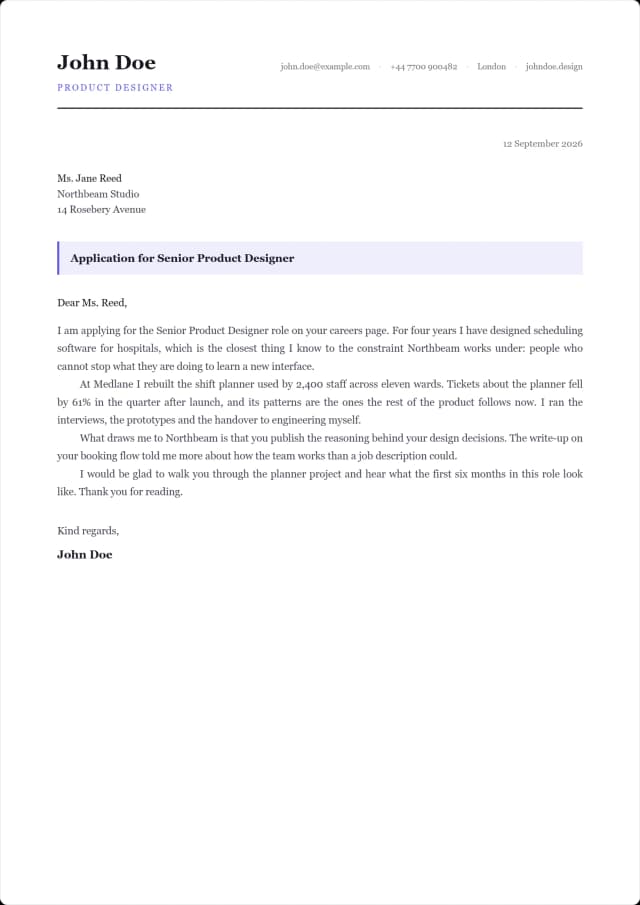
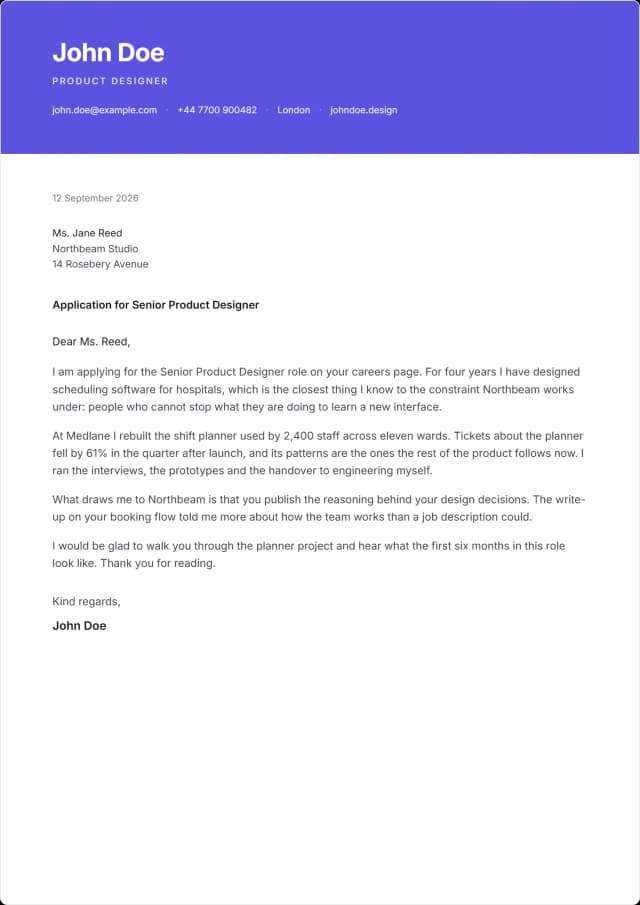
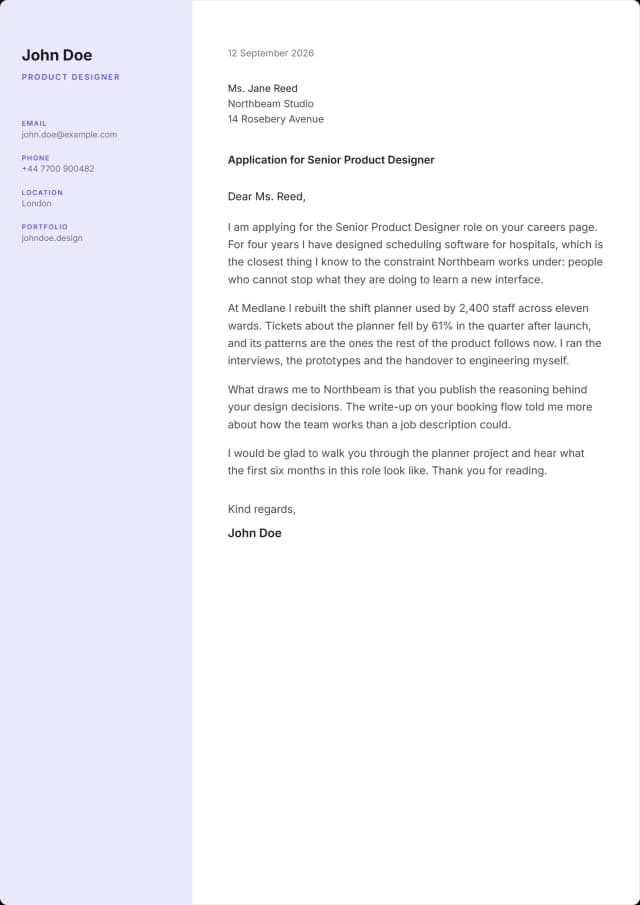
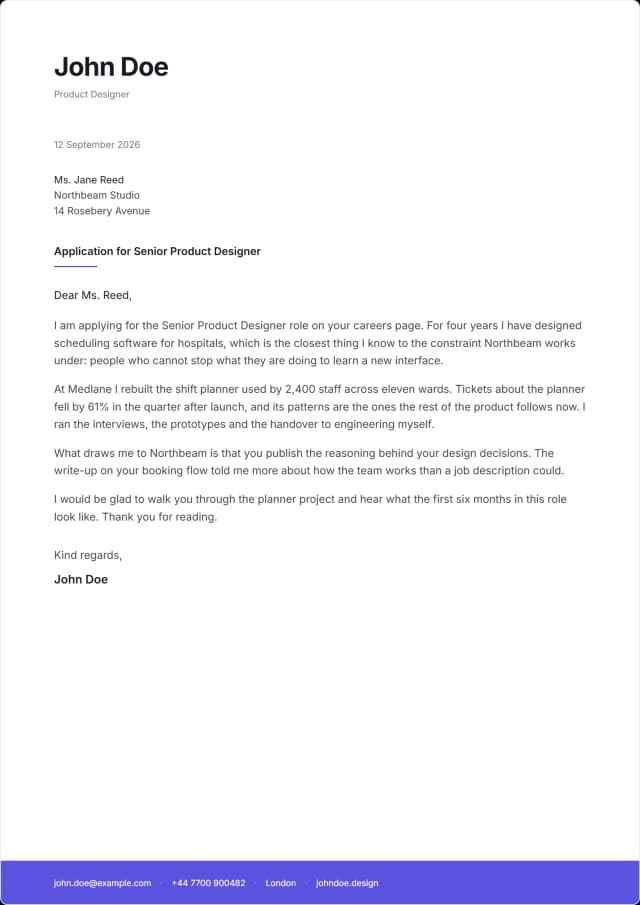
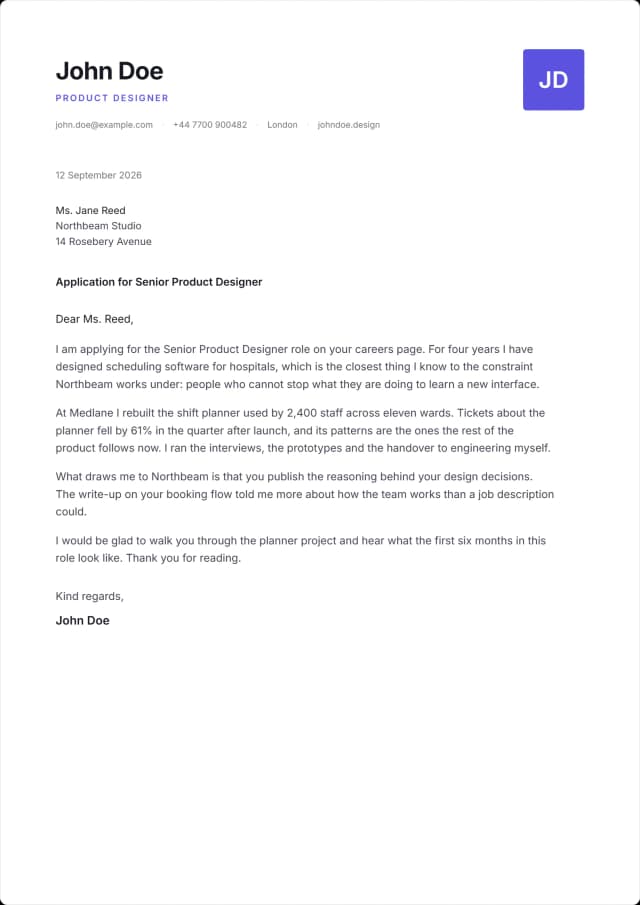
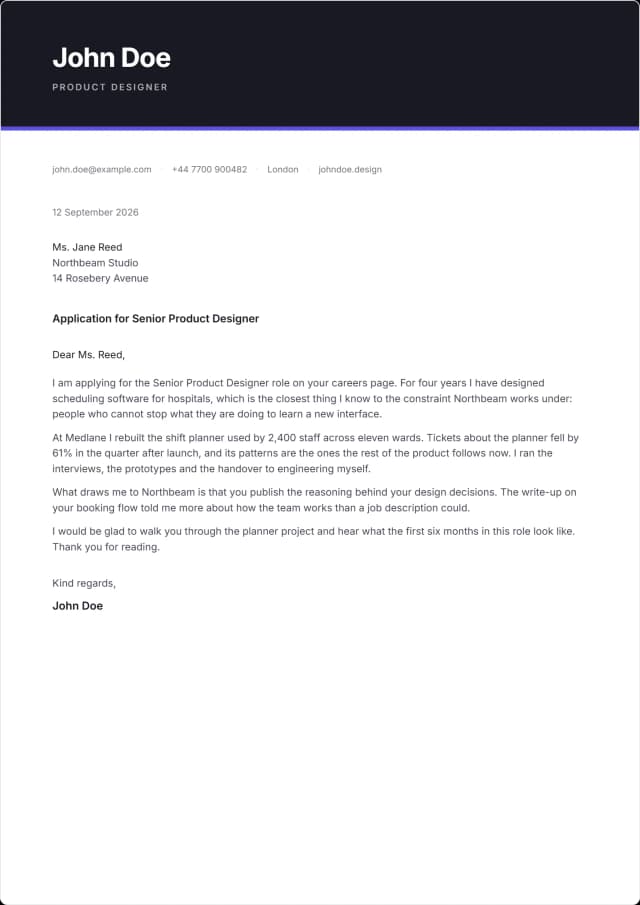
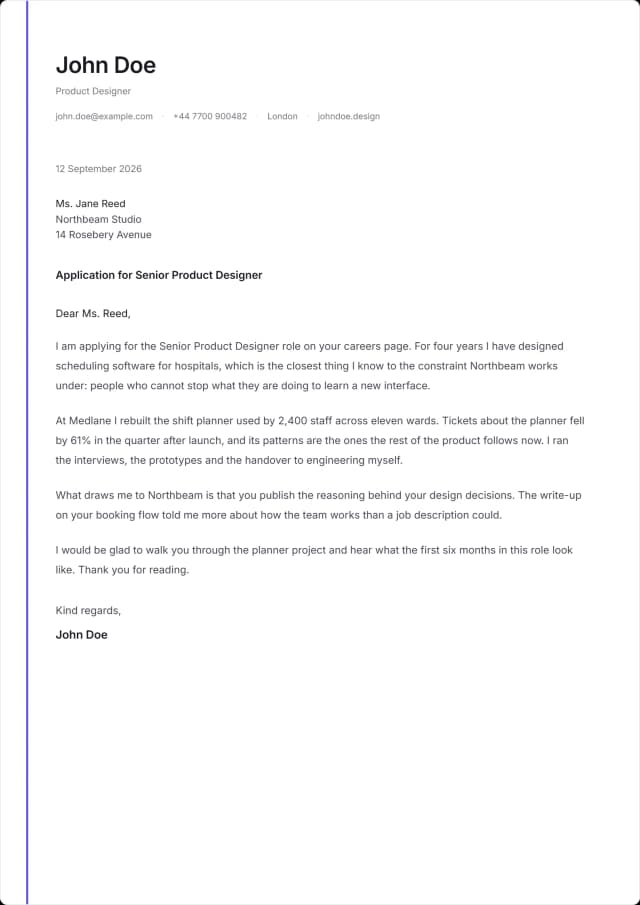
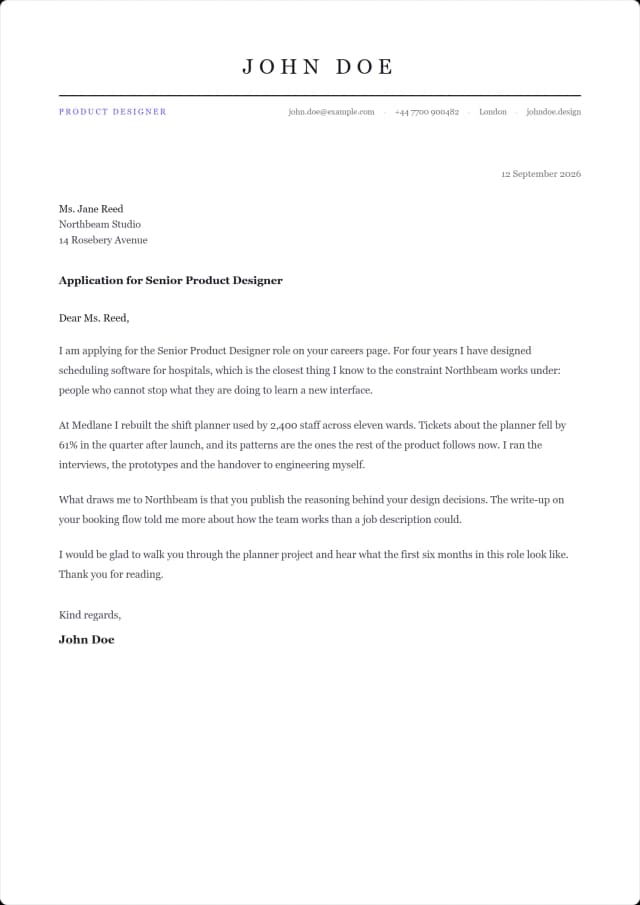
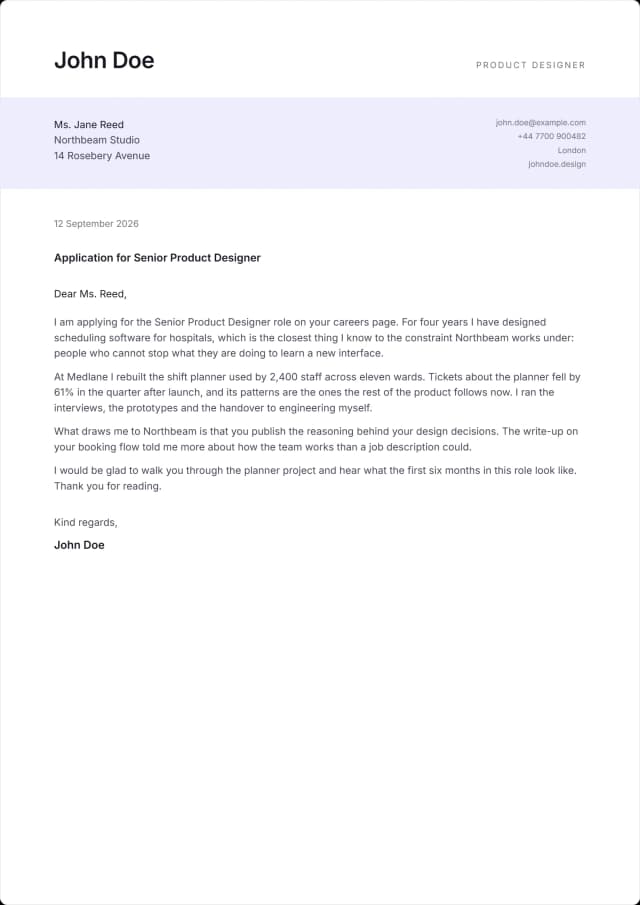
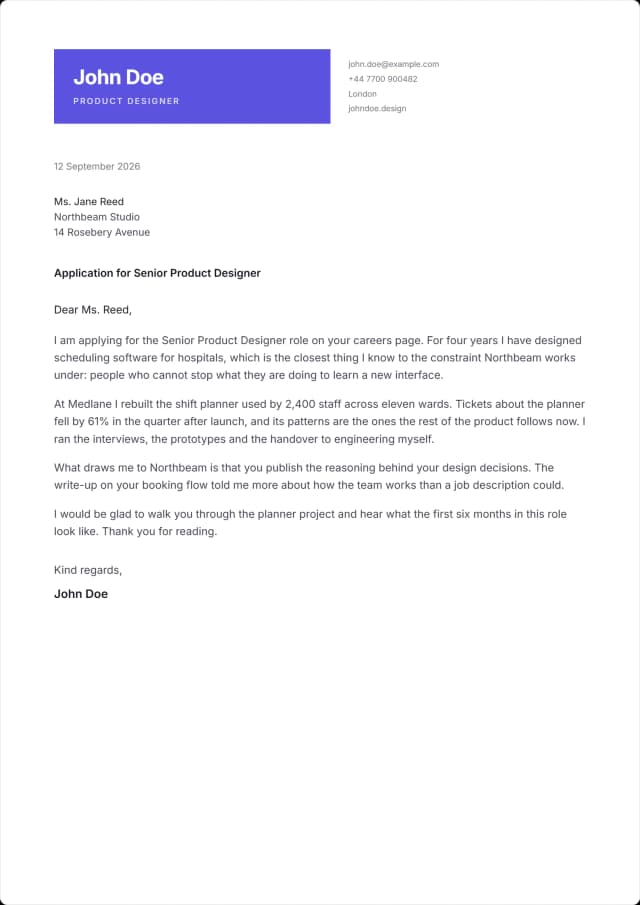
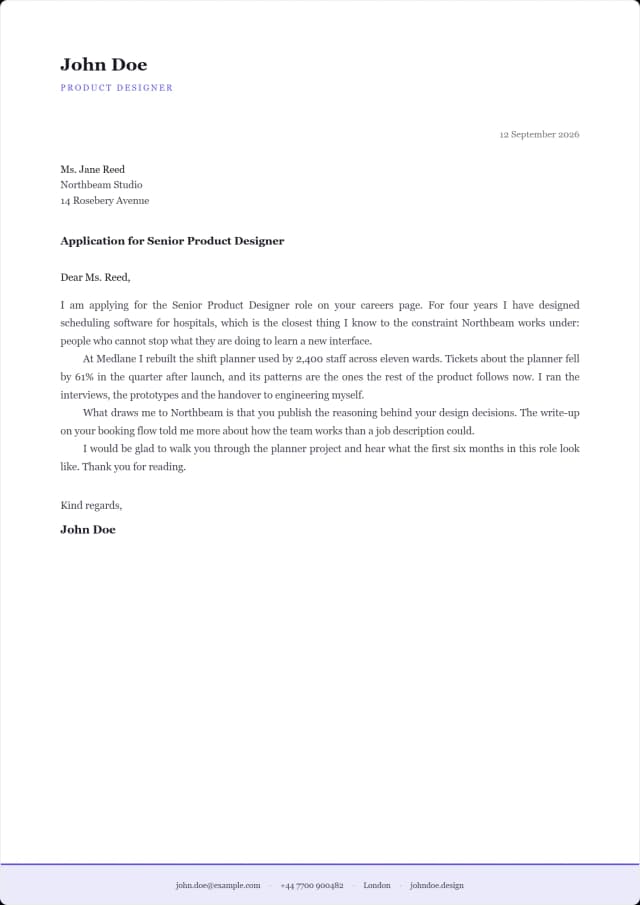
The same letter is set in every layout below, so what you compare is the design rather than 20invented candidates. Open any of them full size to read the type properly before you commit. The colour is settled later, in the editor.
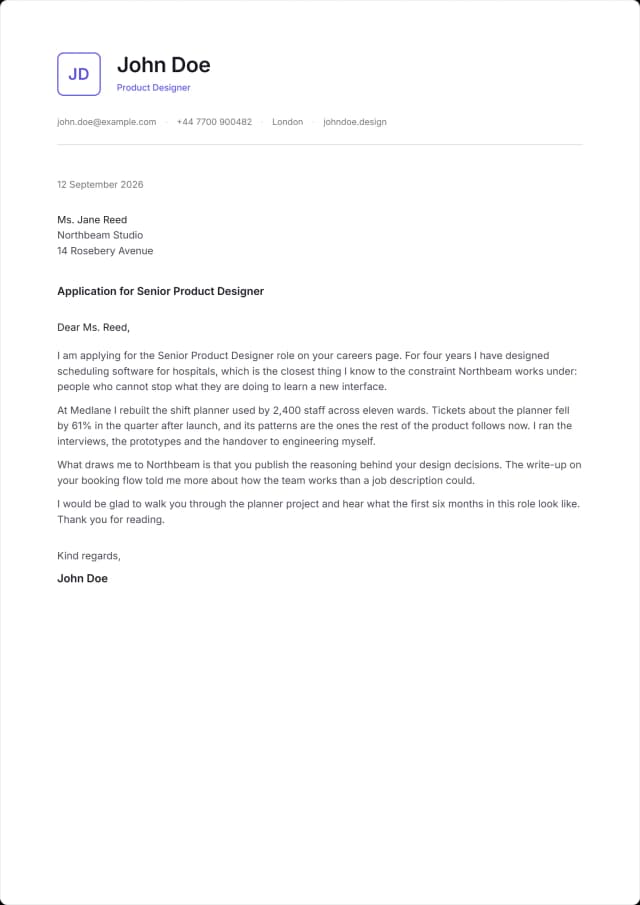
Aperture
Modern · SansMonogram
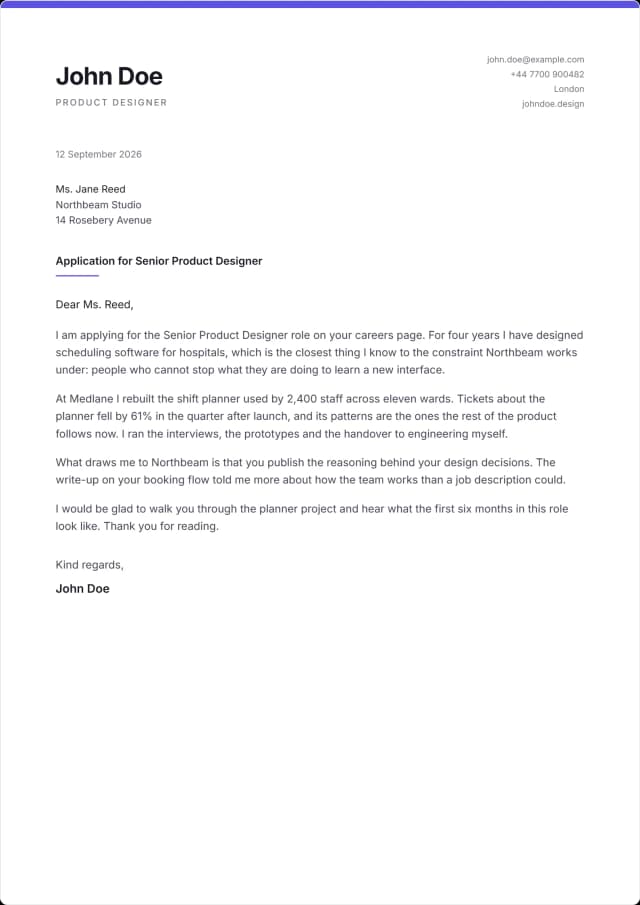
Modern · SansAtlas
Modern · SansCipher
Minimal · SansVertex
Modern · SansBroadsheet
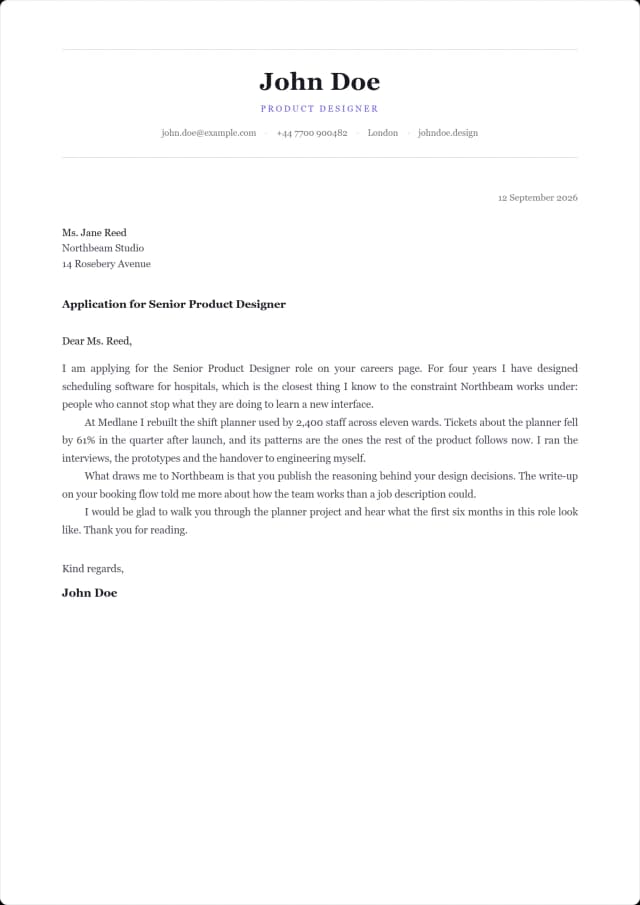
Traditional · SerifLedger
Traditional · SerifQuarto
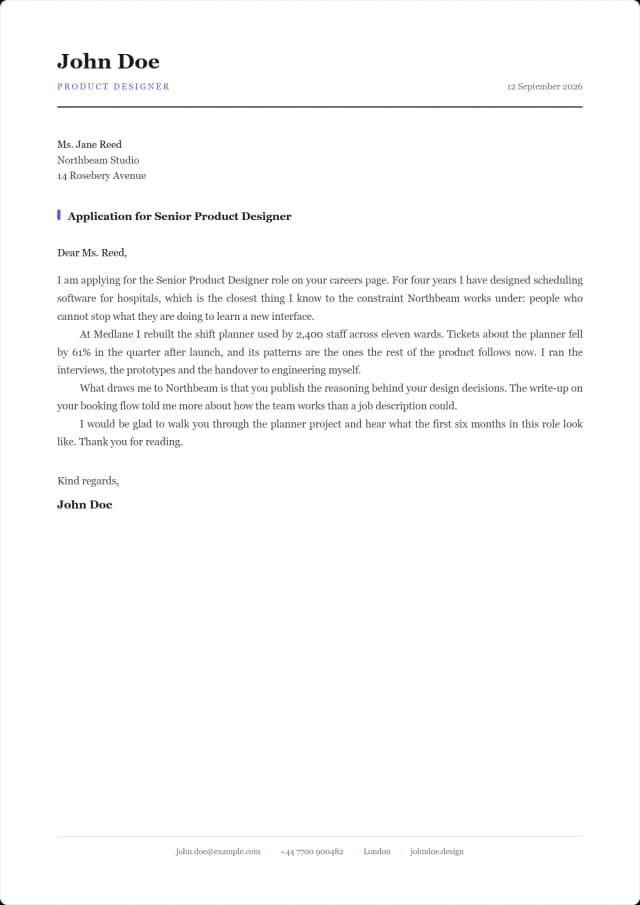
Traditional · SerifRegister
Traditional · SerifDocket
Traditional · SerifSignal
Creative · SansColumn
Creative · SansPulse
Creative · SansBeacon
Creative · SansPlinth
Creative · SansMargin
Minimal · SansFolio
Minimal · SerifGutter
Minimal · SansRelay
Modern · SansTally
Minimal · Serif
How it works
Three steps to a finished letter
About ten minutes, from a blank page to a PDF.
Step 01
Pick a layout
20 to choose from, all A4. The margins, the spacing and the header are decided before you type a word.
Step 02
Fill in the blanks
You, the company, the role, and the four paragraphs. The page redraws as you type, so you always see the finished letter.
Step 03
Print or save as PDF
One page, ready to attach, with the plain text alongside it for application forms that refuse a file.
Anatomy
How to write a cover letter, block by block
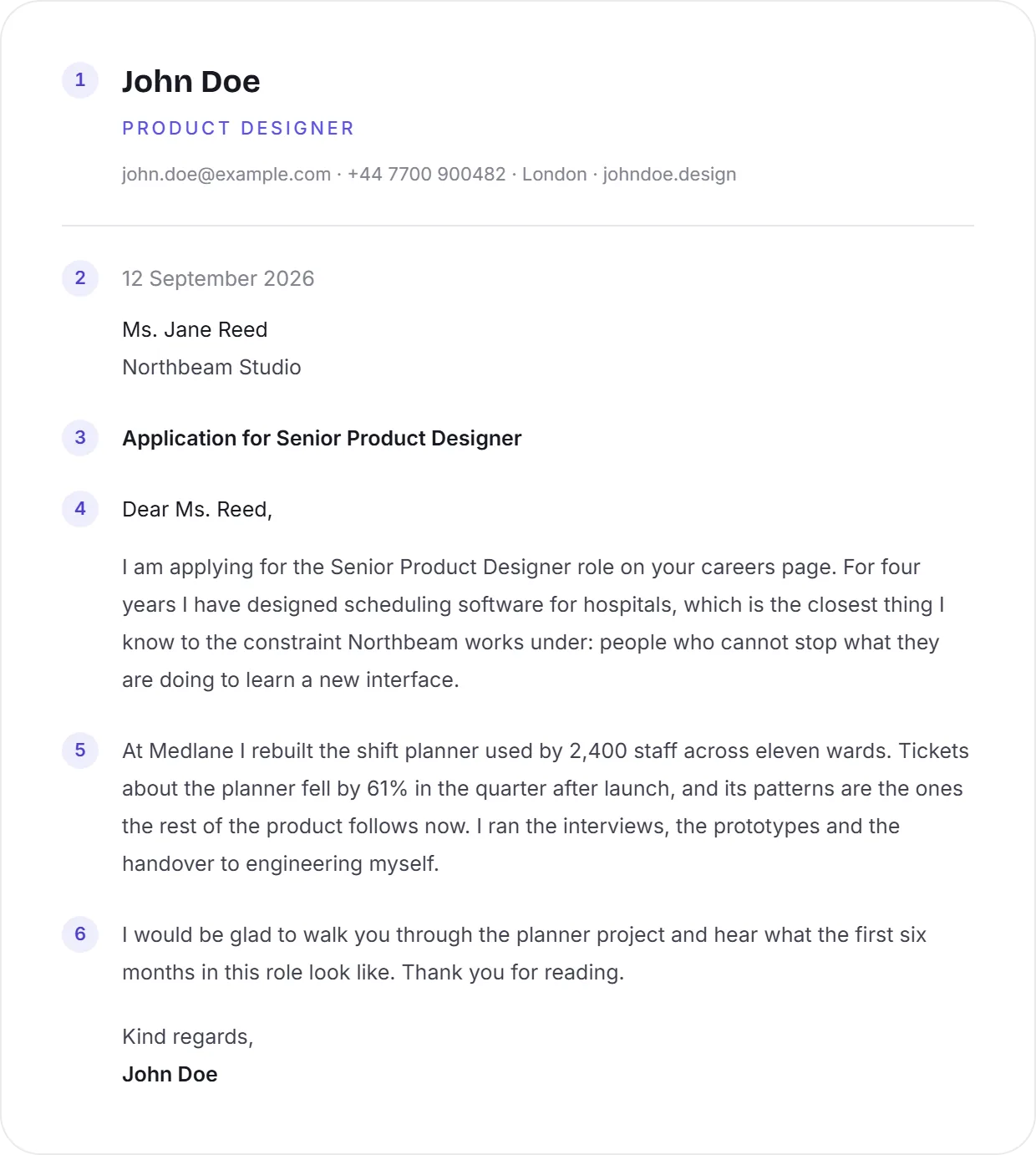
A cover letter has six blocks and they do not carry equal weight. The header and the date are conventions you can settle in a minute. The opening and the evidence are the letter. Here is one with all six, and what each is for.
- 1
The header
Your name, the job title you go by, and one line of contact details. Leave out the photo and the full postal address: UK and US employers routinely strip both before the letter reaches the person hiring.
- 2
Date and recipient
The day the letter goes out, then whoever will read it. Ten minutes on the company site or LinkedIn usually turns "Hiring Team" into a name, and a name changes the tone of everything under it.
- 3
The subject line
One line naming the role, plus the reference number if the advert carries one. Somebody running four vacancies at once should never have to work out which of them you mean.
- 4
The opening
The job you are applying for and one sentence on why you are a credible fit for it. Enthusiasm is not evidence, so "I was excited to see your advert" spends the best line on the page saying nothing.
- 5
The evidence
One project, one number, lined up against what the advert asks for. A planner used by 2,400 staff carries weight that "excellent communication skills" never will, because it can be checked.
- 6
The close
Say what you would like to happen next, thank them, and stop. No promise to ring on Tuesday, no second sign-off, no postscript selling one more thing.
Words in total
Three or four paragraphs, which lands a little over half a page once the header and the address block have taken their share. A letter that reaches a second page has almost always spent the extra words restating the CV. If yours runs long, cut the paragraph explaining your background before you touch the one with the numbers in it.
Five rewrites
What to cut when it runs long
Nearly every letter that spills onto a second page contains these five sentences, and not one of them is carrying weight. Here is what each becomes when it has to earn its line.
Delete
I am writing to express my keen interest in the position of Senior Product Designer.
Write instead
I am applying for the Senior Product Designer role, after four years designing scheduling software for hospitals.
01The first version spends a whole line announcing that you are applying, which the subject line already said.
Delete
Founded in 2009, your company has grown into a leader in its field.
Write instead
Your write-up on the booking flow is the reason I am applying here rather than to the job title.
02They know their own history. What they do not know is which piece of their work actually reached you.
Delete
I have excellent communication skills and a proven track record.
Write instead
I ran the interviews, the prototypes and the handover to engineering on a planner used by 2,400 staff.
03Adjectives nobody can check are invisible, because every other applicant is claiming the same ones.
Delete
As you can see from my attached CV, I have five years of experience.
Write instead
Two of those five years went on rosters for staff who cannot stop mid-shift to learn a new tool.
04Retelling the CV spends the one page that could say something the CV cannot.
Delete
I will follow up next week to discuss my application.
Write instead
I would be glad to walk you through the planner project whenever it suits you.
05The first version puts a deadline on somebody who never agreed to one, and it reads as pressure.
Before you write
Cover letter questions
The six that decide whether the letter is worth writing at all, answered without the usual hedging.
Between 250 and 400 words, which comes out at a little over half a page of A4 in most layouts. Three or four paragraphs is the usual shape. The second page is where a letter stops being read, so treat one page as a hard ceiling rather than a style preference.
While you draft
Tools that pair with a letter
Four that are already open and working, with no signup on any of them.
Pick a template and start writing
20 layouts, every one drawn for A4 and finished on a single page. Nothing to sign up for first.
Start writing