CV templates built to fit on two pages
20 layouts drawn for A4, from a plain single column that any tracking system can read to a two-column page with a tinted rail. Pick one, fill it in, choose its colour, and spend your time on what you actually did.
The templates
20 CV templates, one career
The same CV is set in every layout below, so you compare the design and not twenty invented careers. Open one full size to read the type properly. The colour is chosen later, in the editor.
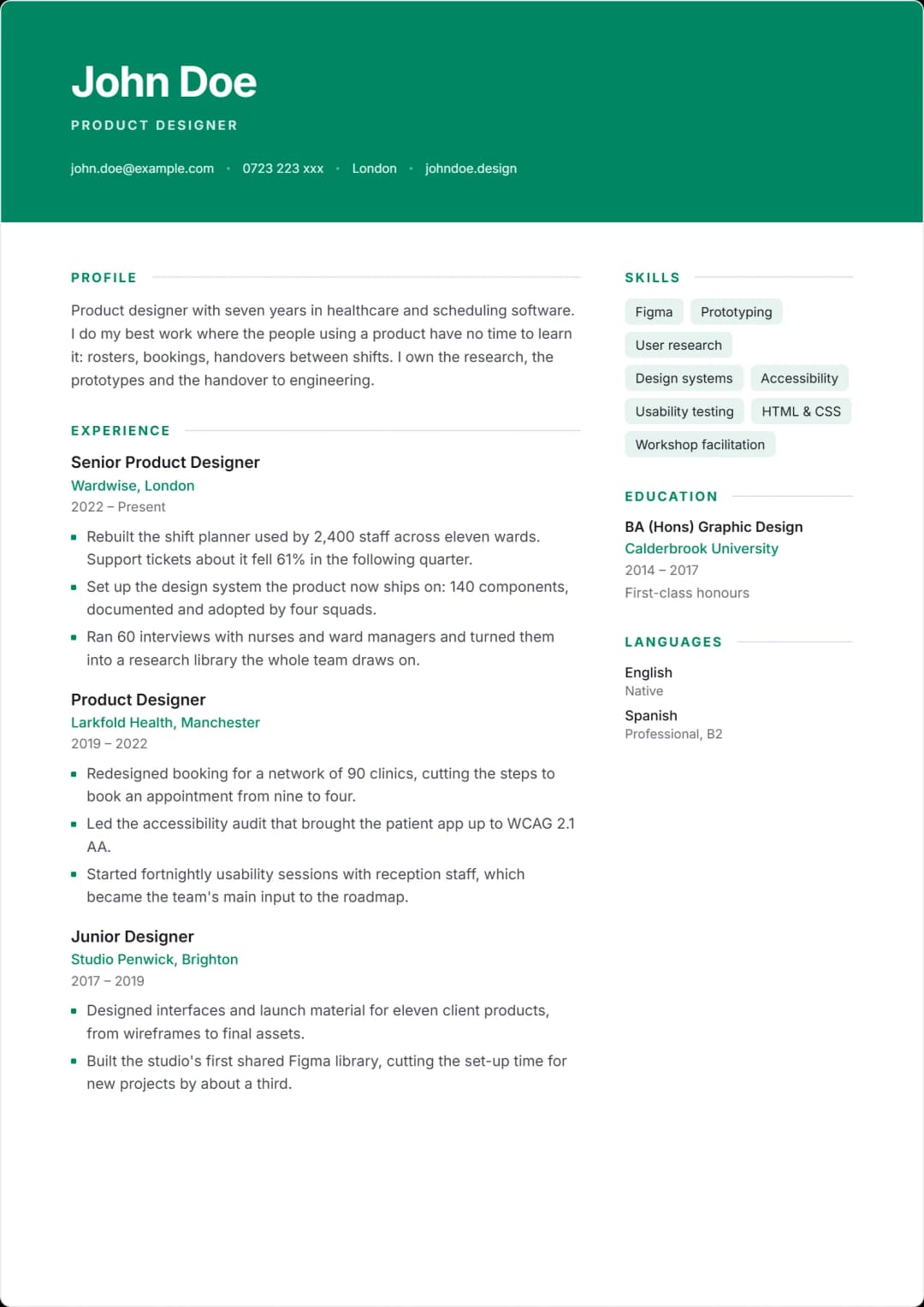
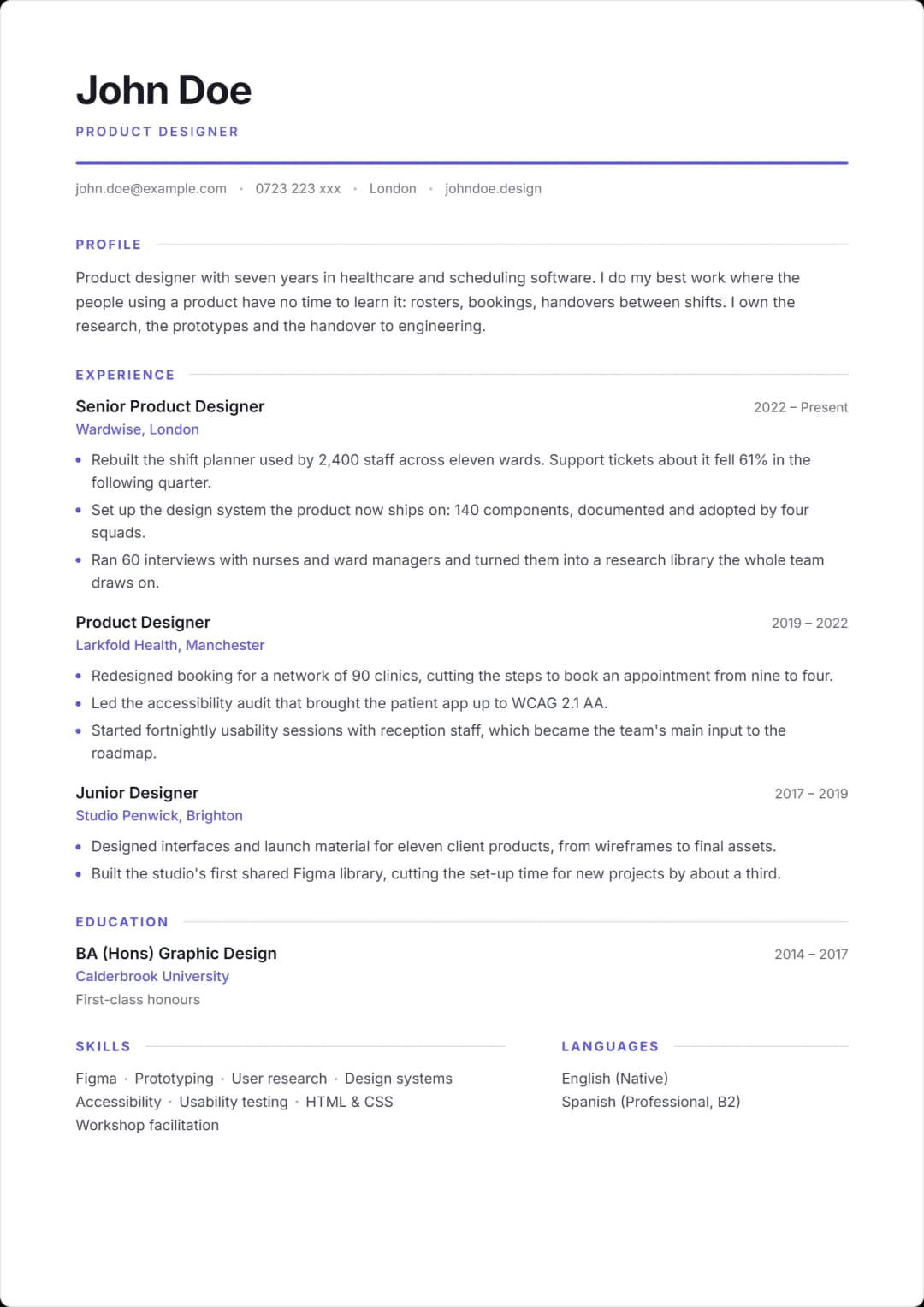
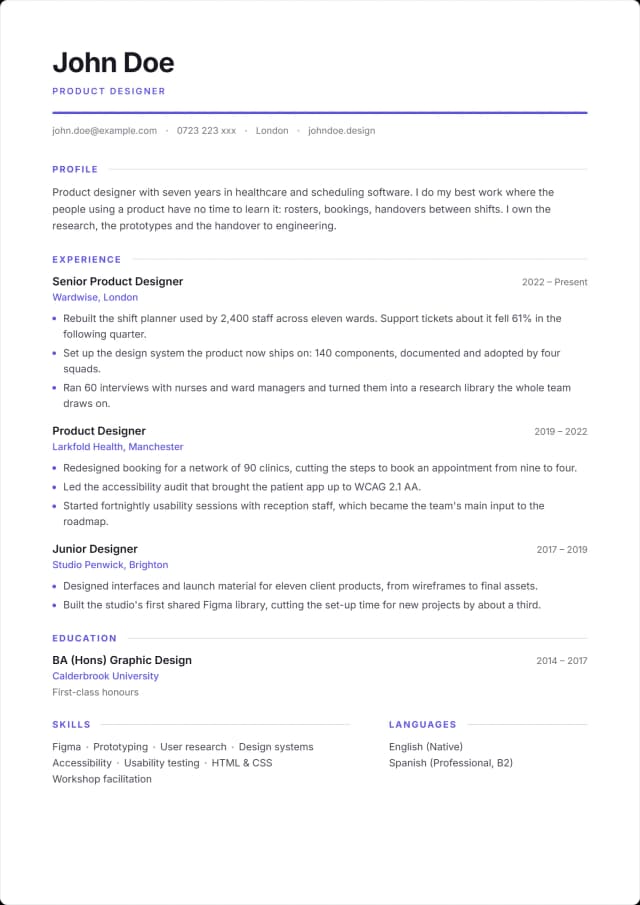
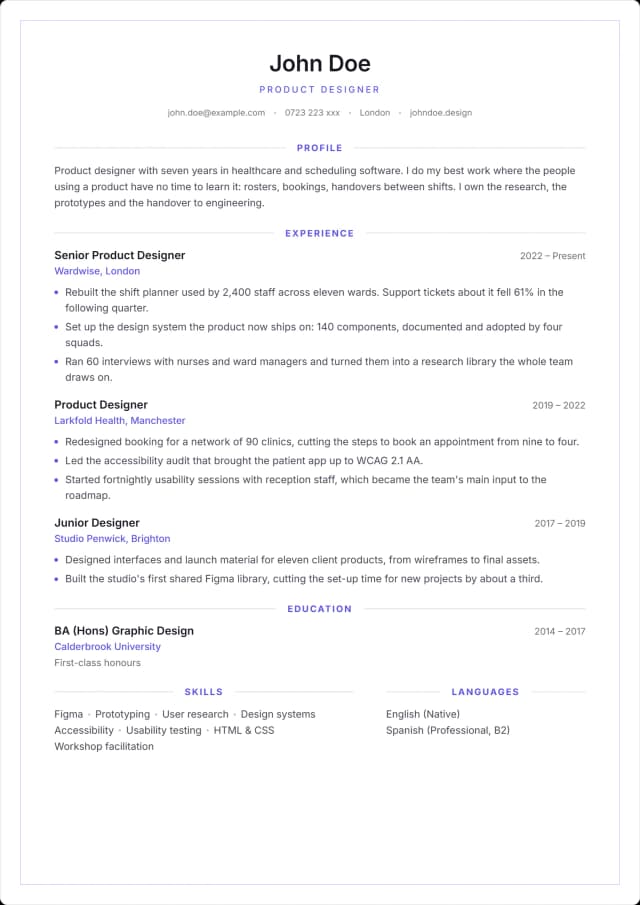
Meridian
Single columnModern · Sans
Name at full size over a thick rule, one column all the way down.
Suits: Tech, product, marketing
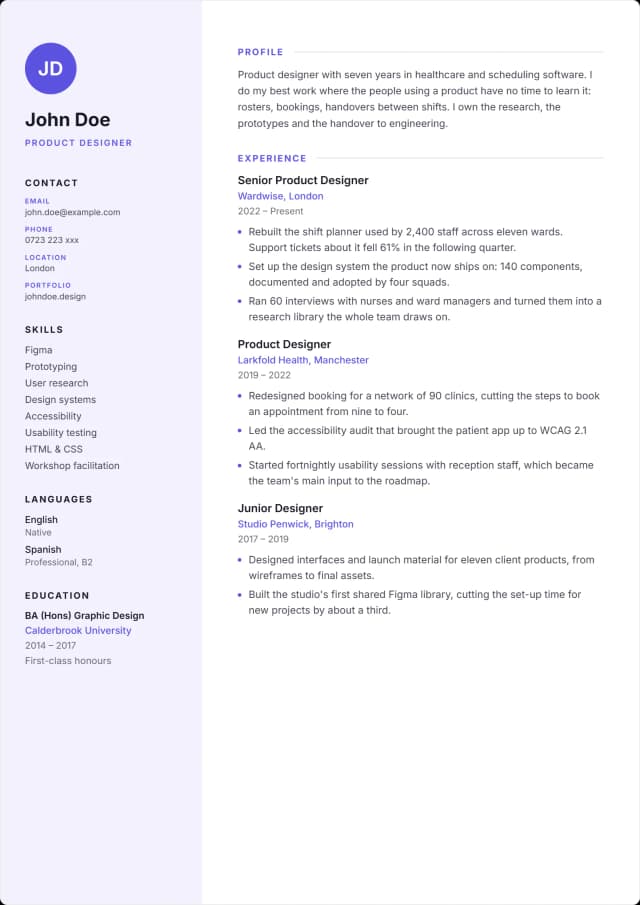
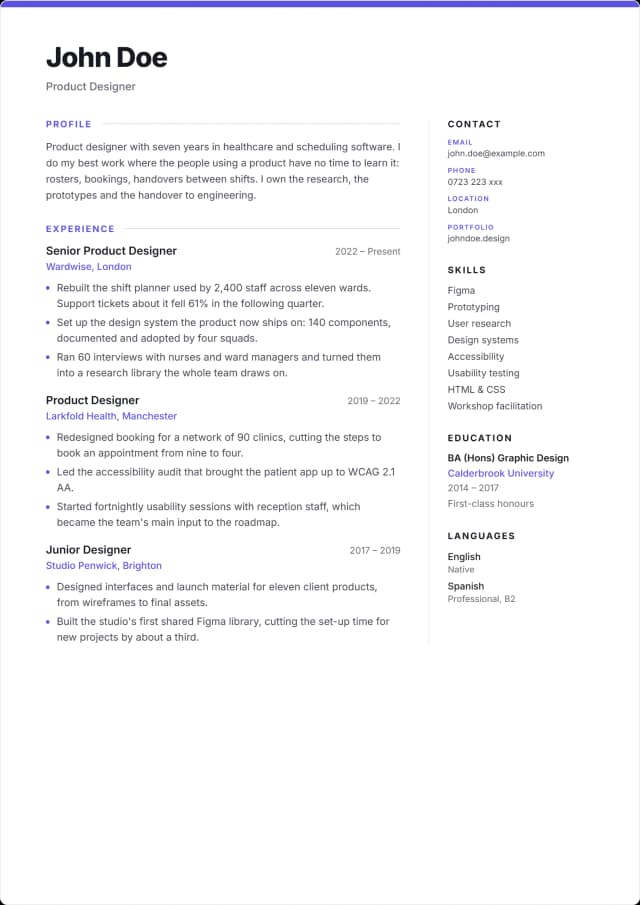
Keel
Modern · Sans
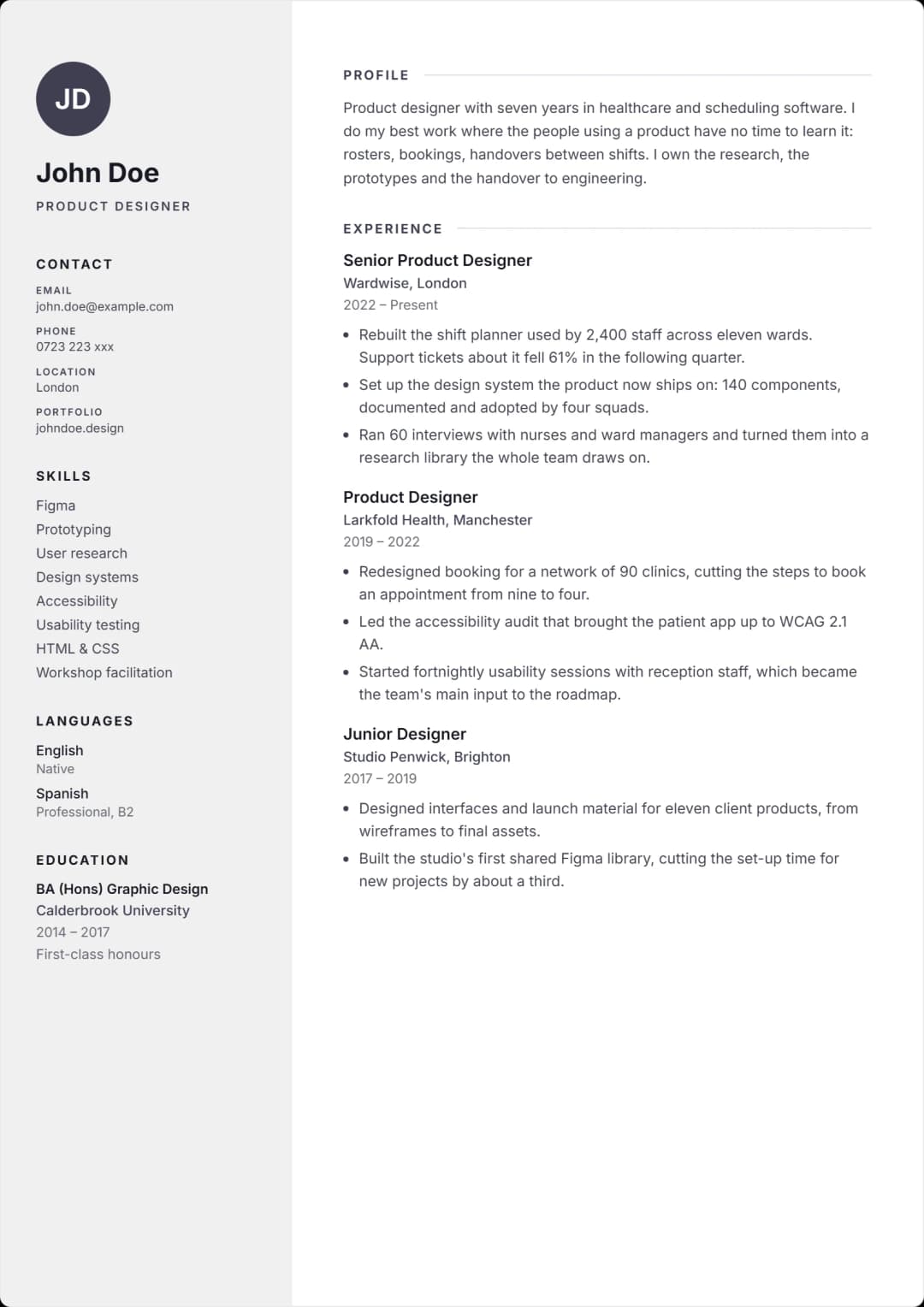
Contacts, skills and education in a tinted rail on the left.
Suits: Design, startups, agencies
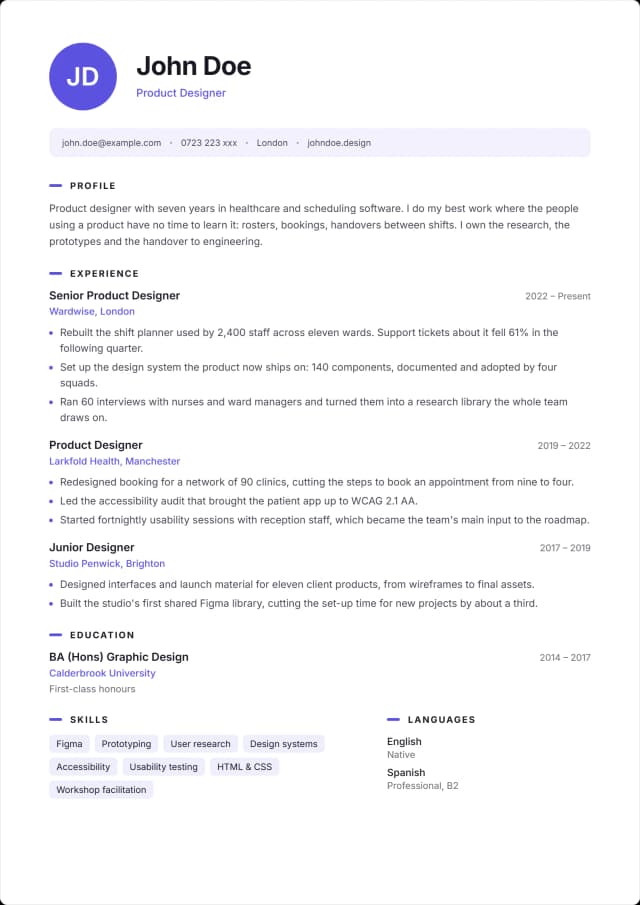
Summit
Single columnModern · Sans
Round photo beside the name, contacts on a tinted strip below it.
Suits: Sales, hospitality, client-facing roles
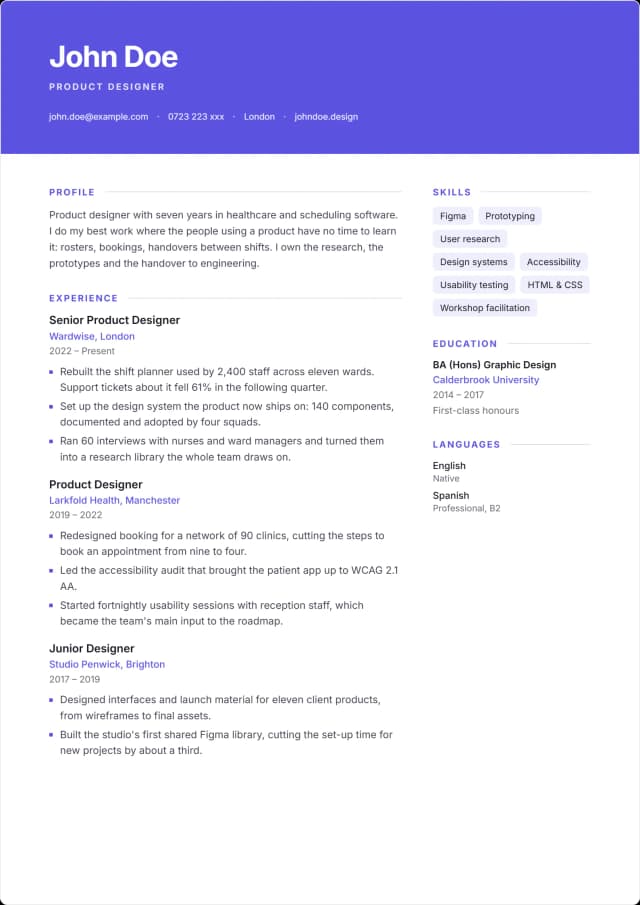
Vector
Modern · Sans
Bold name under a stripe of colour, short facts in a right column.
Suits: Engineering, consulting, project management
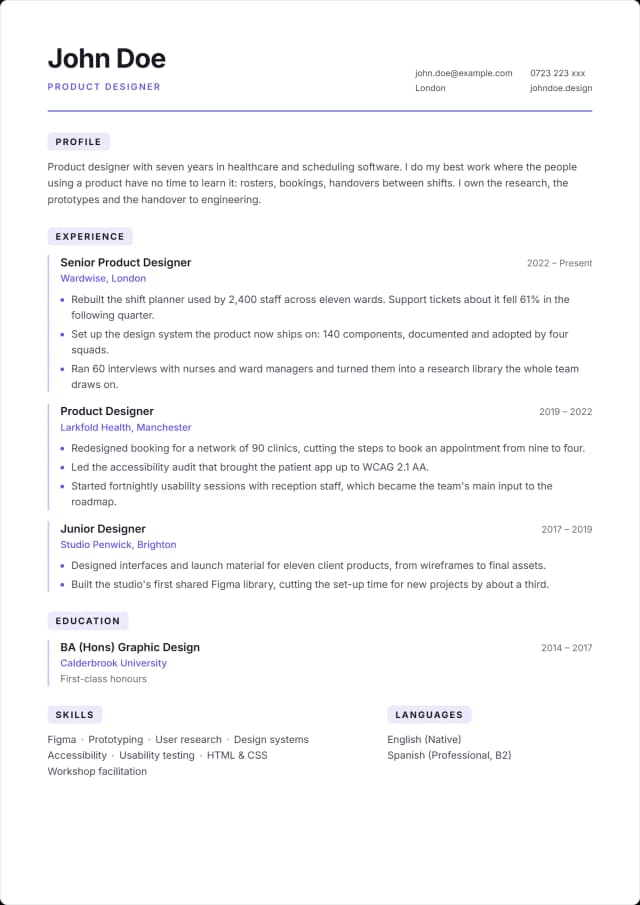
Pulse
Single columnModern · Sans
Section names on tinted chips, each job hung from a thin line.
Suits: Marketing, operations, customer success
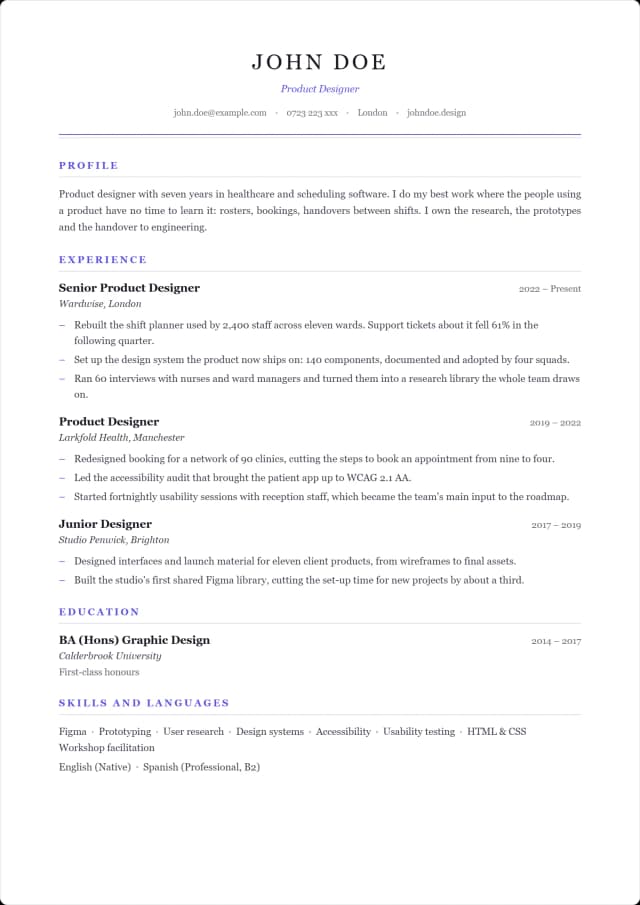
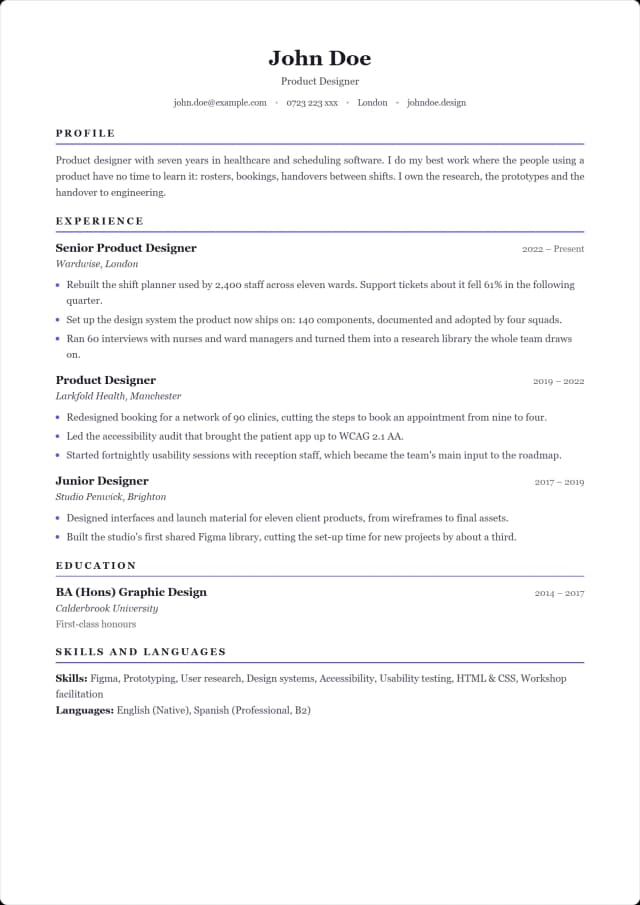
Chancery
Single columnTraditional · Serif
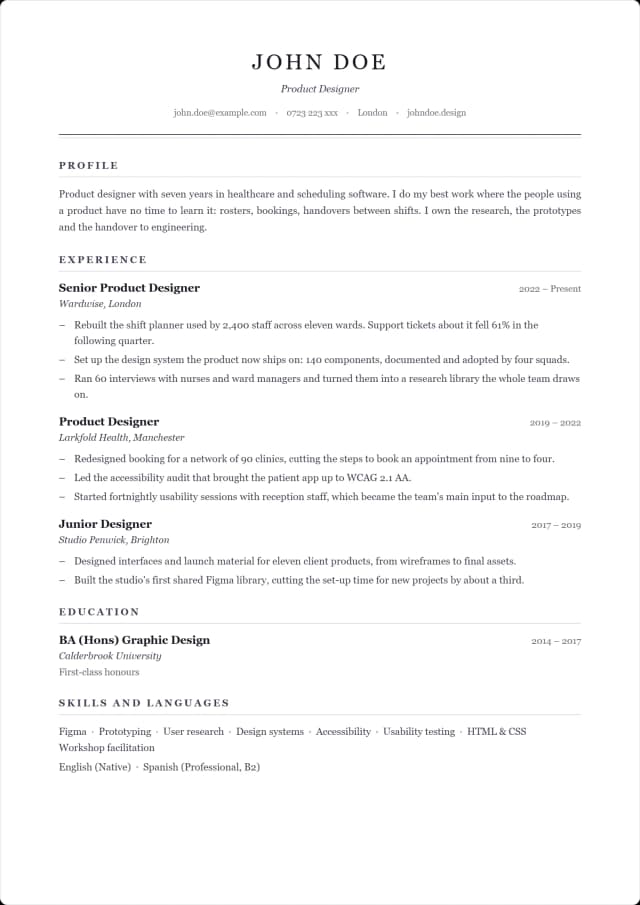
Centred serif heading between hairlines, set like a document.
Suits: Law, finance, academia, public sector
Harvard
Single columnTraditional · Serif
The careers-office classic: centred name, ruled sections, no frills.
Suits: Graduates, banking, government
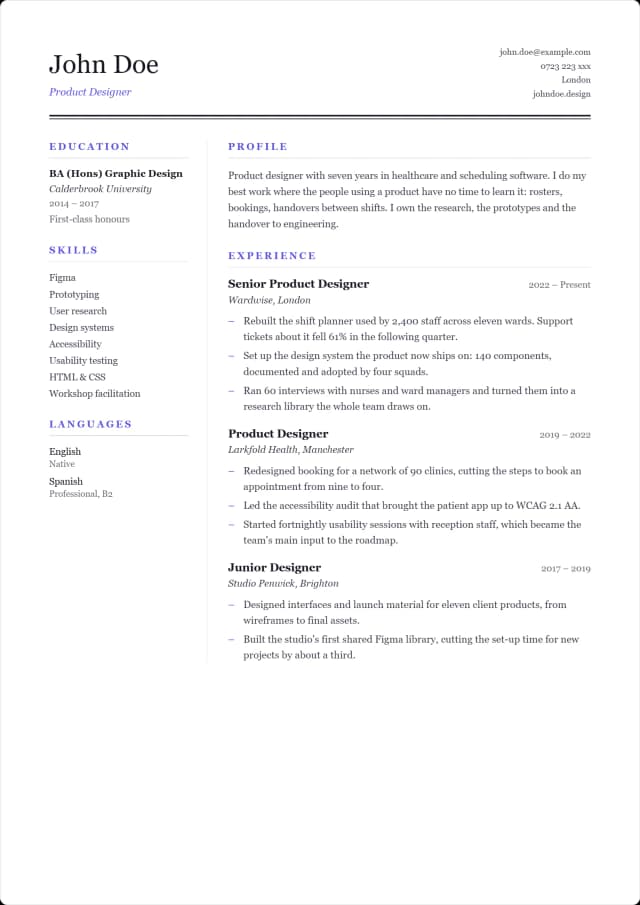
Ledger
Traditional · Serif
Serif in two columns divided by a hairline, under a double rule.
Suits: Accounting, insurance, administration
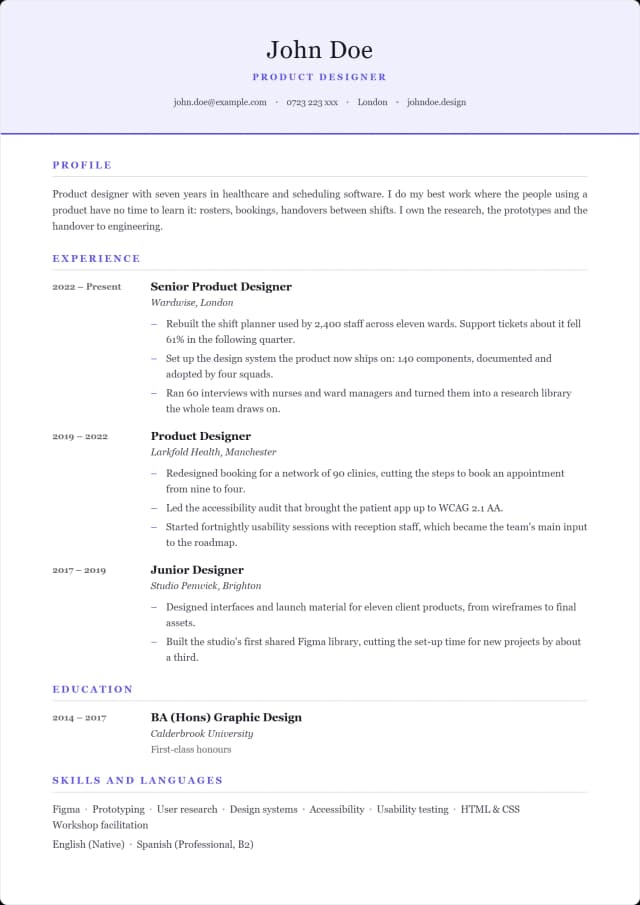
Regent
Single columnTraditional · Serif
Name centred in a tinted head, every job led by its dates.
Suits: Management, healthcare, education
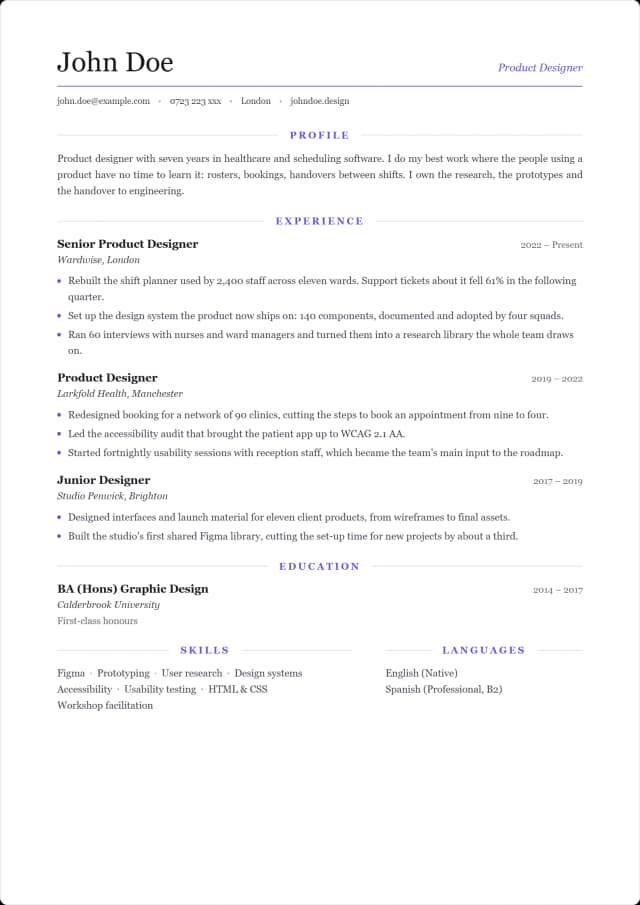
Oxford
Single columnTraditional · Serif
Name and italic role on one line, sections centred between rules.
Suits: Research, publishing, the civil service
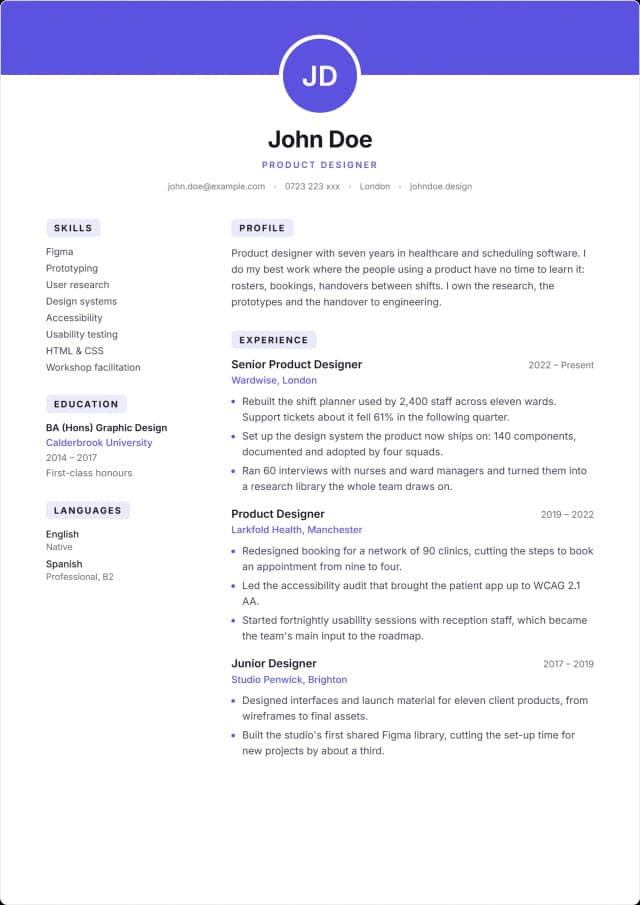
Banner
Creative · Sans
Name reversed out of a full colour band across the top.
Suits: Studios, media, brand roles
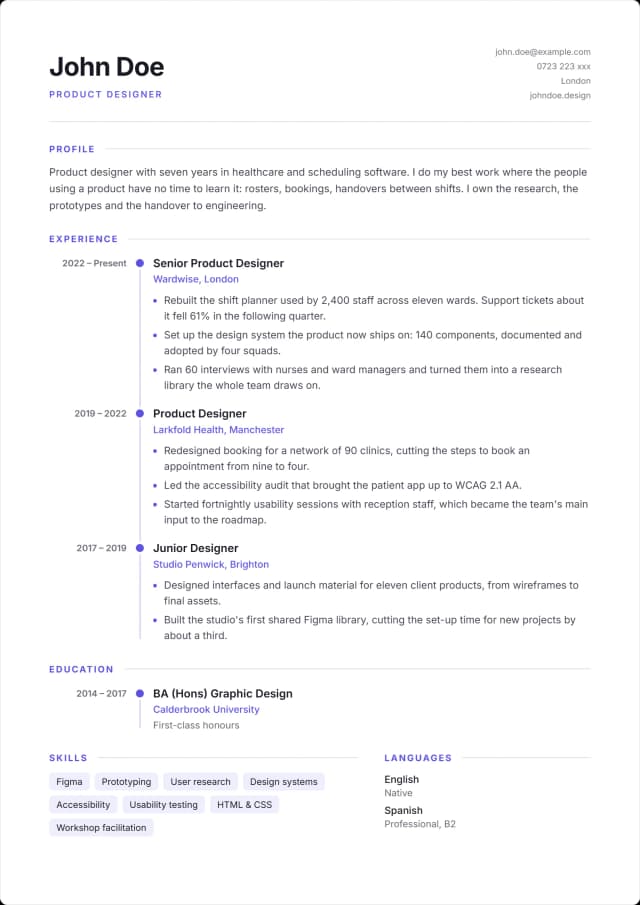
Thread
Creative · Sans
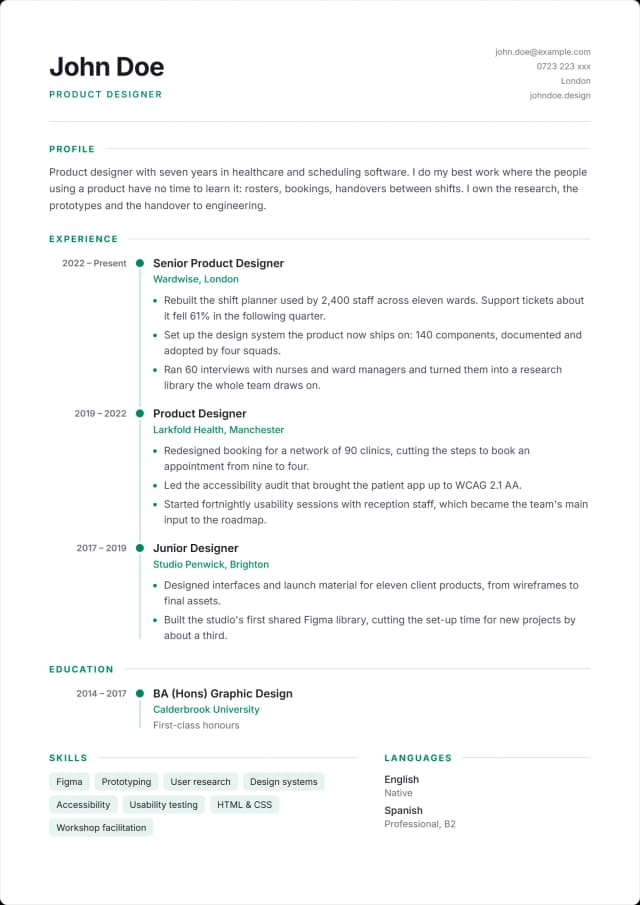
Jobs strung on a vertical line, dates in the gutter beside it.
Suits: Long careers, clear progression
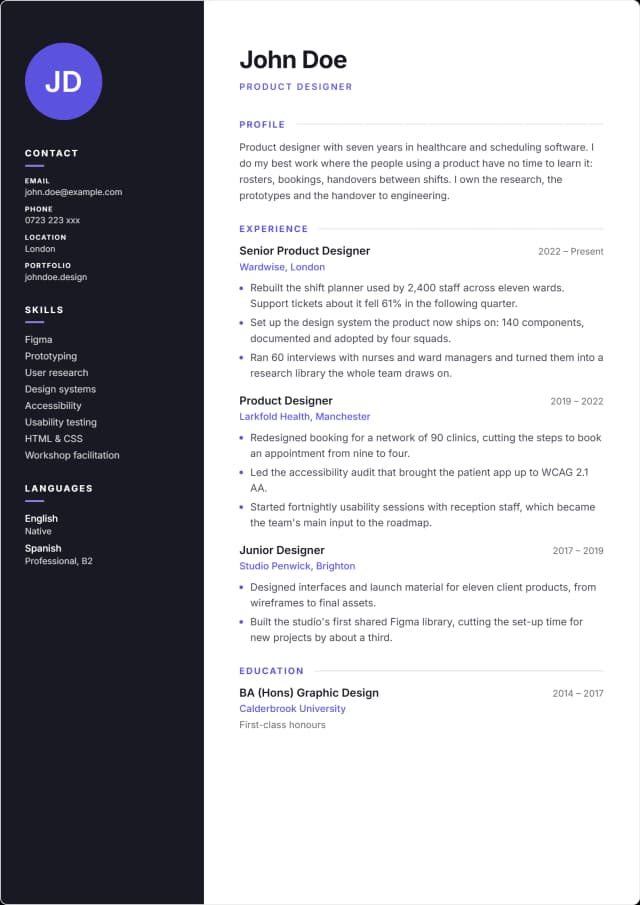
Mosaic
Creative · Sans
Photo, contacts and skills reversed out of a dark rail.
Suits: Creative direction, events, retail
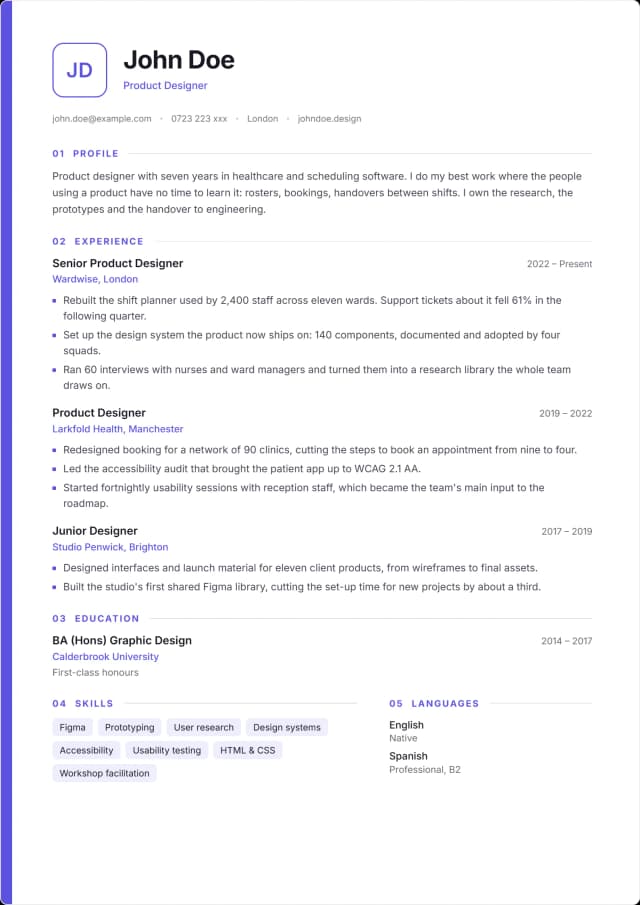
Folio
Single columnCreative · Sans
Colour down the page edge, sections numbered like chapters.
Suits: Architecture, illustration, content
Arc
Creative · Sans
Photo set into a band of colour, the name centred under it.
Suits: Social media, PR, entertainment
Index
Single columnMinimal · Sans
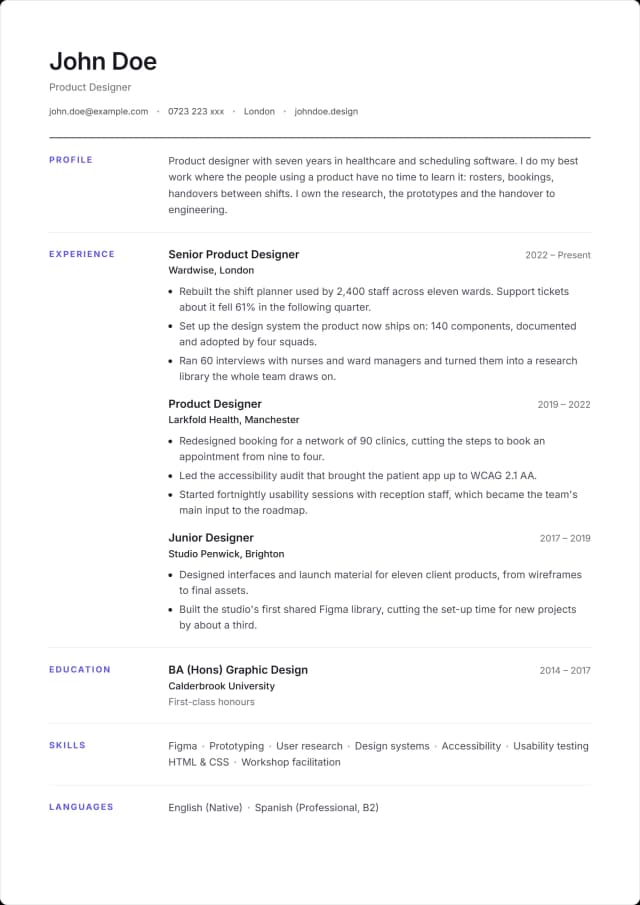
Section names in a narrow left column, colour kept to the labels.
Suits: Engineering, research, operations
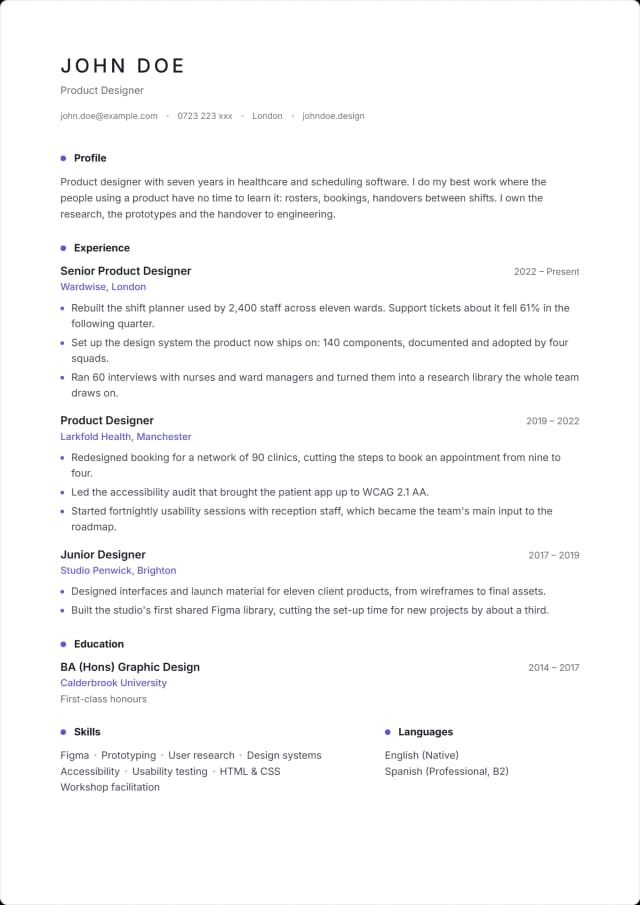
Linen
Single columnMinimal · Sans
Wide margins, a spaced-out name and a dot of colour per section.
Suits: UX writing, HR, nonprofits
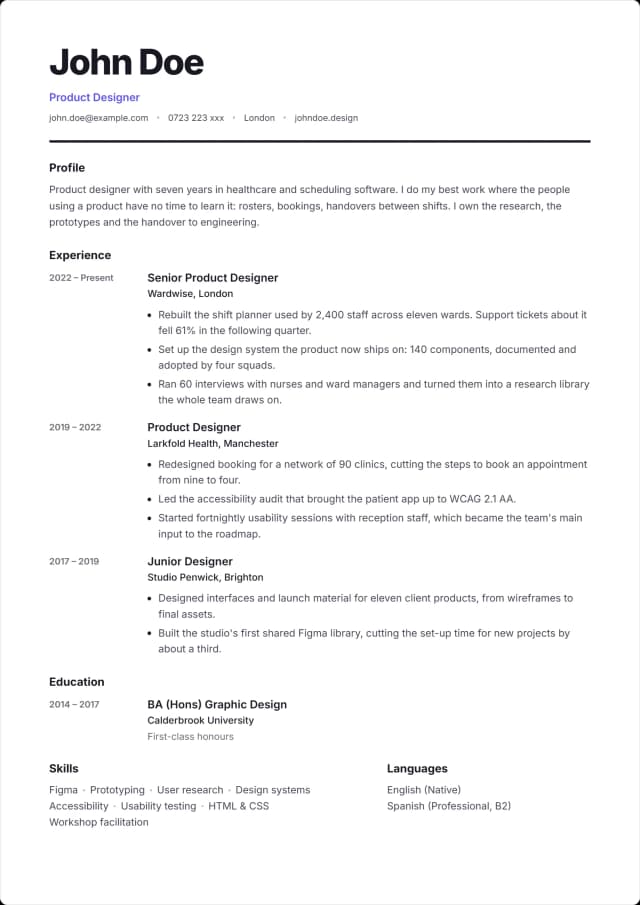
Swiss
Single columnMinimal · Sans
A very large name over a heavy rule, every entry led by its dates.
Suits: Product, data, strategy
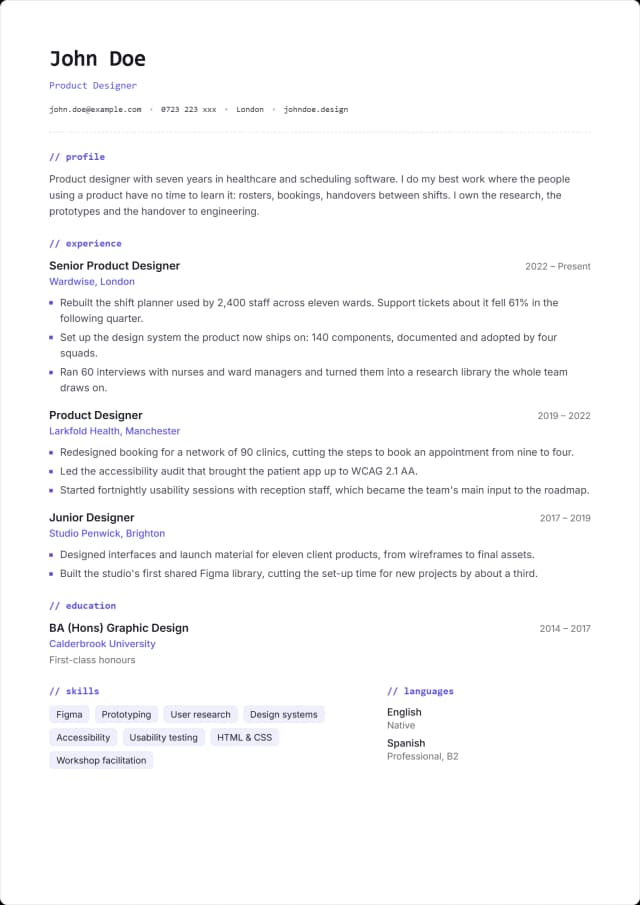
Mono
Single columnMinimal · Mono
Name and headings in a monospace, written like comments in code.
Suits: Software, DevOps, security
Hairline
Single columnMinimal · Sans
Everything inside a thin coloured frame, sections centred.
Suits: Executive assistants, legal support, finance
Choosing a layout
One column or two
The colour and the typeface matter less than this. Where the CV is going decides how many columns it can safely have.
One column
Applying through a careers portal or a job board
Tracking systems read a page top to bottom, and a single column gives them nothing to misread. Every heading, job and skill arrives in the order you wrote it, which is what keyword matching depends on.
Templates:MeridianSummitPulseChanceryHarvardRegentOxfordFolioIndexLinenSwissMonoHairline
Two columns
Sending it to a person: a referral, an email, a recruiter
A side column fits more onto the page and gives the eye somewhere to land. Most current systems cope with it, but older ones can read straight across both columns and mix a skill list into a job description.
Templates:KeelVectorLedgerBannerThreadMosaicArc
Anatomy
How to write a CV, section by section
Six sections, in the order a reader expects them. The experience section is where the decision gets made; the rest exists to get the reader there quickly and to answer the questions it raises.
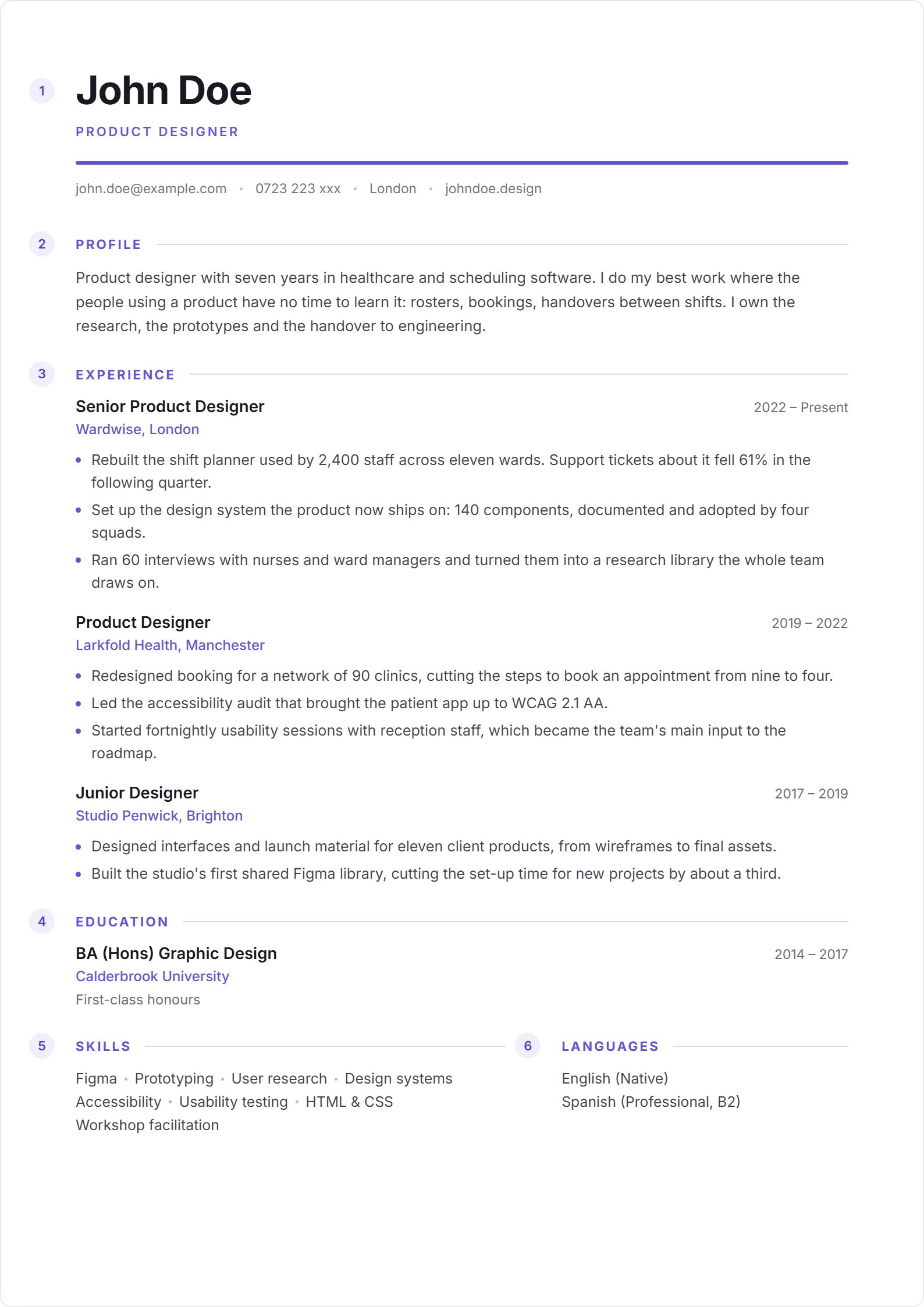
- 1
Name and contact line
Your name, the title you want to be hired as, then email, phone, town and one link. A full postal address, date of birth and photo add nothing in the UK or US, and many employers remove them before the CV is read.
- 2
Profile
Three sentences on what you do, where you have done it and what you are good at. Write it last, once the rest of the page tells you what is worth summing up, and cut any adjective you could not back up in an interview.
- 3
Experience
Newest job first, with the title, the employer, the town and the years. Under each, two to four lines on what changed because you were there. The last ten years get the detail; anything older can shrink to a single line.
- 4
Education
Highest qualification first, with the institution and the years. Grades matter early in a career and fade after the first job or two. Once you have real experience, education moves below it.
- 5
Skills
Tools and methods, named the way the job advert names them. This is where keyword searches land, so "Figma" beats "design software". Leave out anything everyone is assumed to have, such as email or Microsoft Word.
- 6
Languages and extras
Languages with an honest level, then certifications, publications or volunteering only if they relate to the role. A short section here that fits is worth more than a long one that only fills the page.
At most, for most people
Two sides of A4 is the UK norm once you have a few years of work behind you, and one side is right for a first job. A CV that spills onto a third page has usually kept every job at the same level of detail. Shrink the oldest roles to a line each before you cut anything from the last five years.
Five rewrites
Bullet points that say what you did
Most weak CVs are built from the same five lines. Each one describes a duty or claims a quality. The rewrite names something that happened and puts a number on it.
Delete
Responsible for managing the company's social media accounts.
Write instead
Grew the company Instagram from 4,000 to 31,000 followers in eighteen months, mostly through weekly customer stories.
01"Responsible for" describes the job advert you were hired from. The reader wants to know what happened while you held the job.
Delete
Worked closely with cross-functional teams to deliver projects.
Write instead
Coordinated design, engineering and legal on the checkout rebuild, which shipped two weeks ahead of the agreed date.
02Every job involves other people. Name which people and what came out of it, and the teamwork no longer needs claiming.
Delete
Excellent communication and problem-solving skills.
Write instead
Wrote the onboarding guide that cut the time before a new starter works a shift alone from three weeks to eight days.
03Soft skills in a list get skipped, because every CV in the pile has the same list. Shown in a result, they get believed.
Delete
Helped to improve customer satisfaction.
Write instead
Answered around 40 support tickets a day and lifted the team's satisfaction score from 82% to 91% over two quarters.
04"Helped to improve" hides both your part and the size of the change. Give the number, even a rounded one.
Delete
Proficient in Microsoft Office, email and the internet.
Write instead
Built the stock forecasting spreadsheet the branch still orders from, using pivot tables and XLOOKUP.
05Tools everyone is assumed to have take a line and tell the reader nothing. Name the advanced use, or leave the tool out.
Before you write
CV questions
What people most often want settled before they send one off.
Two sides of A4 for most people with a few years of work behind them, and one side for a graduate, a school leaver or a first job. Academic and medical CVs are the exception and run as long as the publications and posts require. If yours reaches a third page, the oldest jobs are the place to cut.
Before you send it
Tools for the finishing touches
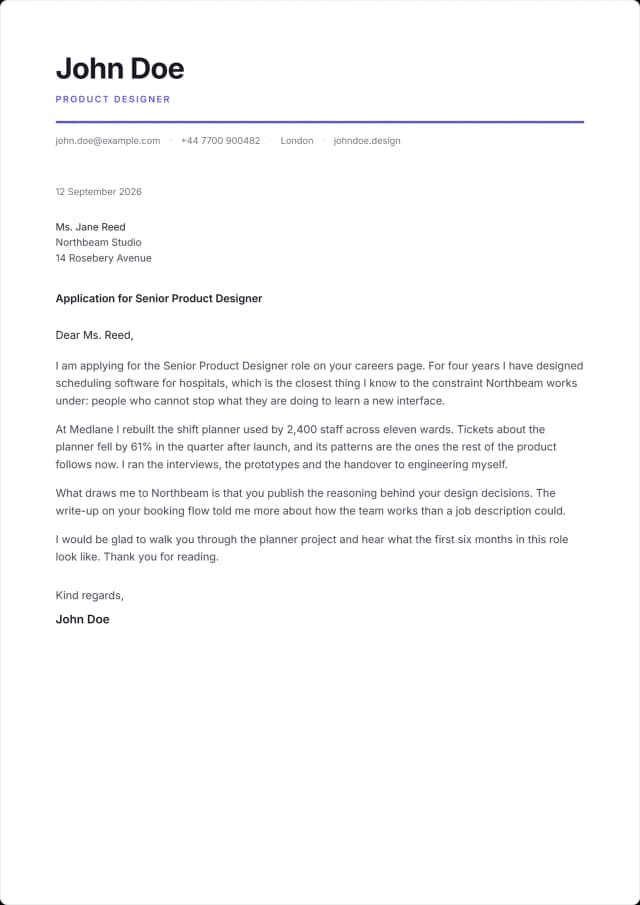
Join the CV and the letter into one PDF, check a section's length, or size a photo for a European application.
Find the layout your CV belongs in
20 layouts, 13 of them single-column for application portals. Nothing to sign up for first.
Start your CV